Human in Every Loop Isn't AI Governance
By Viral Trivedi, Director of Solution Engineering and Customer Success, Tuskira
Walk into any SOC and count the consoles it's supposed to watch. There's the EDR, the SIEM, the CNAPP, the identity provider, the email gateway, the WAF, the vulnerability scanners, and the cloud-native alerts, each shipping with its own dashboard and its own idea of what matters most. No analyst sees all of them, and no team sees all of them at once. That math was broken long before AI arrived.
Which is why the industry's favorite reassurance about AI deserves a closer look. Every vendor offers the same comfort, a promise that a human stays in the loop. But which loop? If the answer is every loop, at machine speed and machine volume, then doesn't the human become a rubber stamp with a backlog?
Key takeaways
- Per-decision human approval fails at machine speed in one of two ways: it becomes a bottleneck that erases the speed you bought AI for, or it becomes a reflexive click that approves decisions nobody actually reviewed.
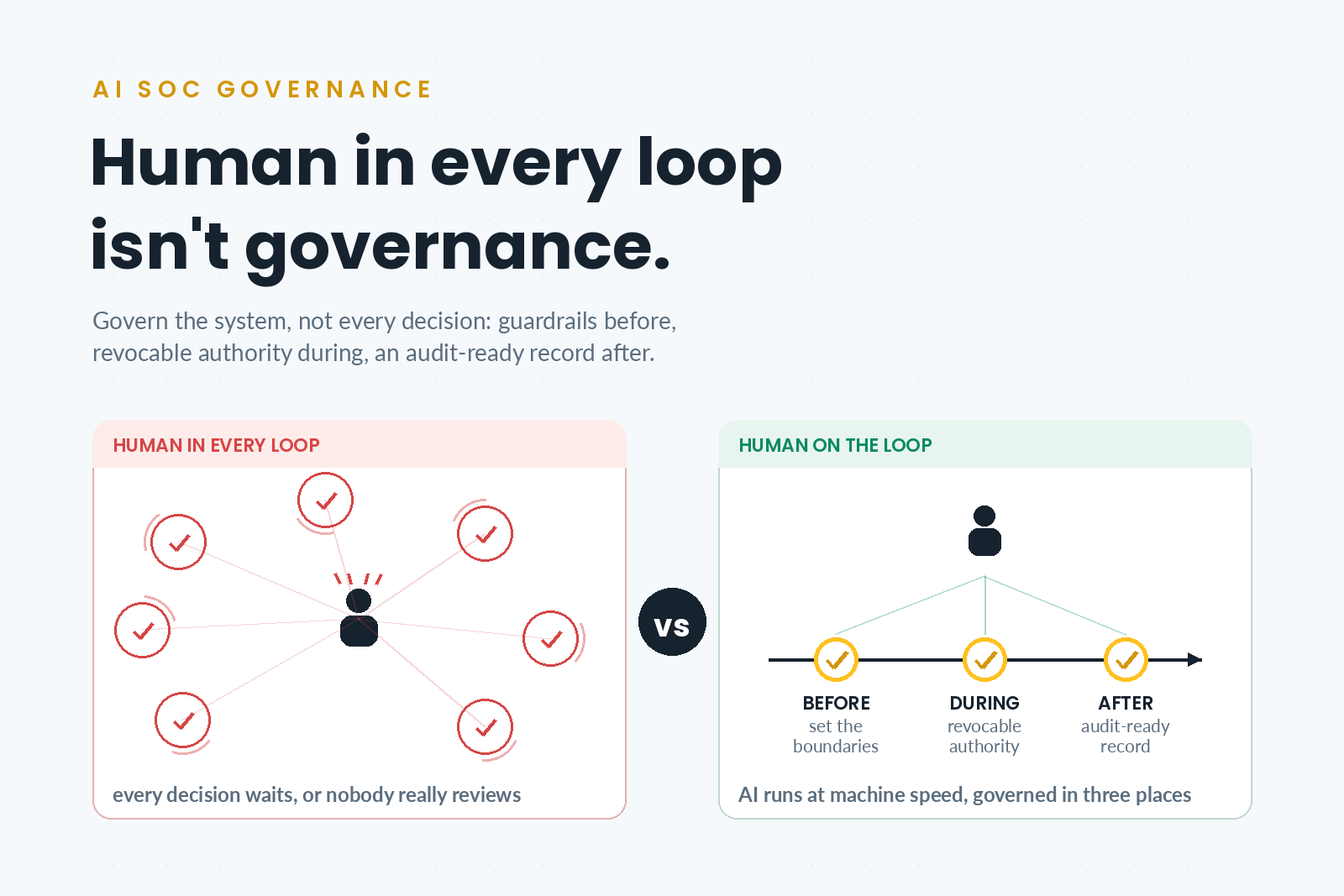
- The alternative isn't removing humans. It's moving them: human-on-the-loop governance operates in three places, before the decision, during execution, and after the fact.
- Before: policy and autonomy boundaries define what AI may decide alone and what always waits. During: authority is revocable and actions are reversible. After: every verdict carries a tamper-evident, audit-ready decision record.
- The EU AI Act's Article 14 sets the direction: high-risk AI systems must support oversight that works in the product, where a person can genuinely understand, intervene, override, or stop the system. Nominal oversight doesn't meet that bar.
The approval queue is just a new alert queue
Security teams already know what happens when a review process meets machine-scale volume, because they've lived it for a decade. It's called the alert queue. Alerts arrive faster than humans can triage them, so teams triage by sampling, tune detections down until the noise is survivable, and accept that most of the queue goes unreviewed. Nobody defends this as oversight. It's backlog management.
Put a human approval step in front of every AI decision and you've rebuilt that queue with a different name. When the AI produces hundreds of verdicts an hour, the approver has seconds per decision. Two outcomes are possible. The approver stays careful, and the pipeline slows to human speed, at which point the AI's speed advantage is gone and the attacker's remains. Or the approver gets fast, and "review" degrades into clicking approve on decisions that were, functionally, already made. Neither outcome is the oversight anyone was promised.
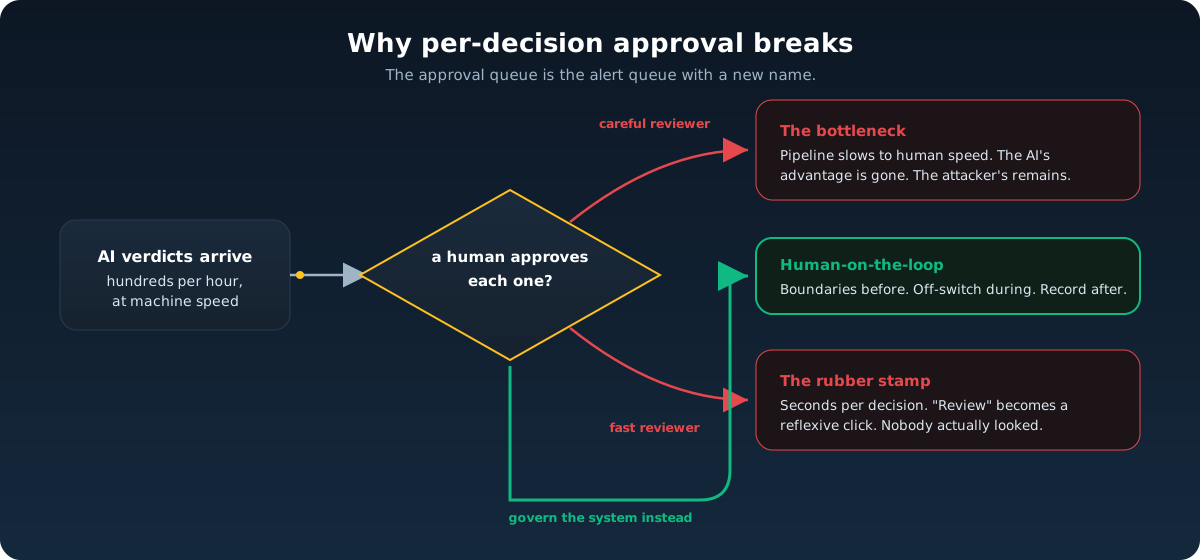
The myth, precisely stated, isn't human involvement. It's human-in-every-loop: the idea that per-decision approval scales to machine volume. It doesn't, and teams that pretend otherwise get the worst of both worlds, machine-speed liability with human-speed control.
Human-on-the-loop: govern in three places
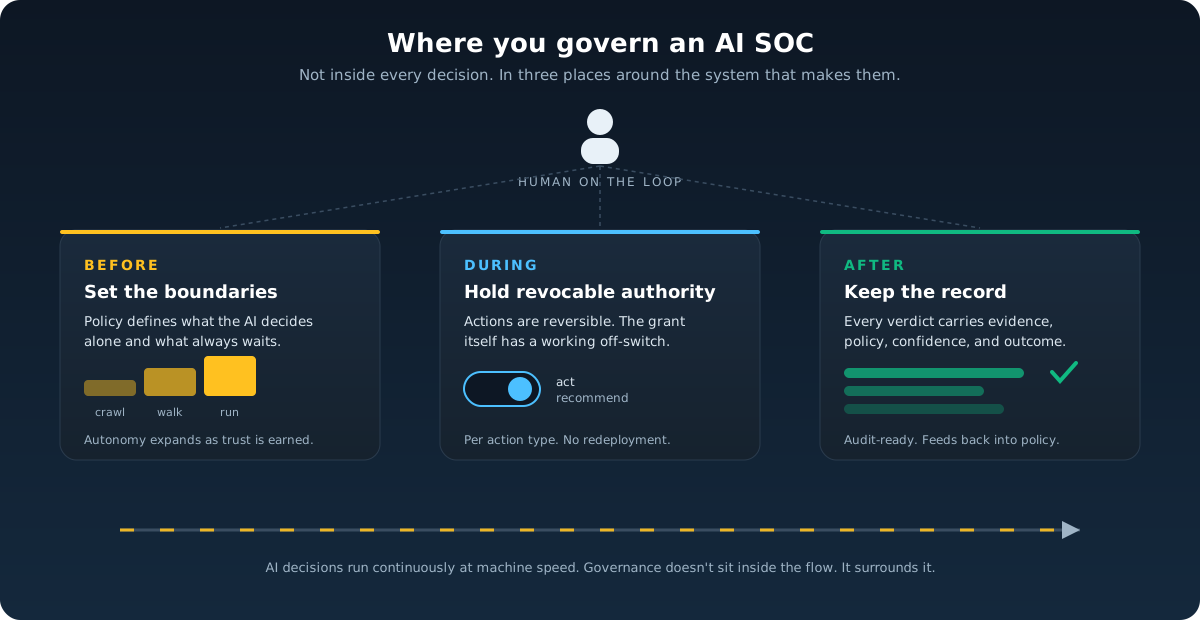
The honest architecture moves human authority out of the individual decision and into the system that makes decisions. Governance happens in three places. This is the model Tuskira uses for governed AI security operations: policy-defined autonomy, reversible action, and evidence-backed records.
Before: set the boundaries
Humans decide, in advance and in policy, what the AI may do alone and what always waits for approval. Enriching an alert to a verdict with evidence: autonomous. Applying a reversible firewall rule to a validated exposure: autonomous within policy, or approval-gated, your call. Isolating a production system or anything irreversible: always waits. These boundaries aren't a philosophy statement; they're configuration, and they expand deliberately as the AI earns trust. That sequencing discipline is the crawl-walk-run path to autonomous AI, and it's where human judgment does its highest-leverage work.
During: hold revocable authority
Autonomy granted must be autonomy you can take back, at two levels. Any action the AI takes should be individually reversible, which is why reversibility is the real guardrail: a control change you can undo in seconds is a fundamentally different risk than one you can't. And the grant itself should be revocable: one switch that drops the AI from acting back to recommending, per action type, without a redeployment. Oversight during execution isn't watching every decision. It's holding the off-switch and knowing it works.
The off-switch is half of the story, though. Supervision during execution also means steering, and this is where correction actually happens. When an analyst disagrees with a verdict, they should be able to set the agent straight on that specific investigation, and when the correction should hold everywhere, promote it into standing guidance the agent reasons with, the known applications, allowlists, business context, runbooks, and investigation patterns that define how your environment actually works. Every correction improves the next thousand verdicts, which is a form of oversight that clicking approve on each one never delivers.
After: keep the record
Every verdict and every action carries a tamper-evident, audit-ready decision record: the evidence considered, the sources queried, the policy applied, the confidence, the action taken, and the outcome. This is what makes accountability for autonomous actions a product screen instead of a philosophy debate. It's how mistakes get found, corrected, and fed back into policy. And it's what you hand the auditor, the regulator, or the board when they ask the only question that matters: who decided, based on what?
Notice what this architecture does to the human role. It doesn't shrink it. It promotes it, from clicking approve at machine speed to setting policy, supervising a system, and reviewing evidence. That's the same shift every other discipline made when automation outpaced manual control. Pilots didn't disappear when autopilot arrived. They stopped holding the yoke every second and started managing the flight.
The regulation points the same way
The EU AI Act points in the same direction. Article 14 says high-risk AI systems must support effective human oversight: people need to be able to understand, monitor, override, reverse, intervene, or stop the system where appropriate. Whether a given security tool is high-risk is a legal classification question, and the compliance timeline for high-risk categories is still phasing in. But the standard serious buyers will expect is already clear: oversight has to work in the product, not just appear in a policy document.
Read against that standard, human-in-every-loop fails in the most ironic way possible. A human approving machine-volume decisions at machine speed can't meaningfully intervene in any single one of them. The architecture that survives the "can a human actually stop this?" test is the one described above: boundaries set before, authority revocable during, records kept after.
What to ask a vendor
If you're evaluating an AI security platform, "is there a human in the loop?" is the wrong question, because every vendor answers yes. Ask these instead. Who defines the autonomy boundary, you or the vendor? Can you change it per action type without a redeployment? Which actions are reversible, and what does reversal take? Can your analysts correct the agent's behavior and set standing guidance without filing a vendor ticket? Show me the decision record for a real verdict. And what happens when the AI is wrong: how's the mistake detected, reversed, and fed back into policy?
Those questions build on Dimension 4 of our AI cyber defense buyer's guide, and they separate platforms built for governed autonomy from platforms that bolted an approve button onto a black box. (It's also how the Tuskira platform is built: policy-defined autonomy boundaries, reversible actions, and an evidence-backed decision trail on every verdict.)
Frequently asked questions
What's the difference between human-in-the-loop and human-on-the-loop?
Human-in-the-loop means a person approves each individual AI decision before it executes. Human-on-the-loop means the AI executes within human-defined boundaries while a person supervises the system: setting policy in advance, holding revocable authority during operation, and reviewing audit-ready records after. The first breaks at machine volume; the second is designed for it.
Does human-on-the-loop mean removing humans from security operations?
No. It relocates human judgment to where it has leverage: defining what the AI may decide alone, supervising with a working off-switch, and reviewing decisions with full evidence. High-impact and irreversible actions still wait for explicit human approval under this model.
Does the EU AI Act ban autonomous security AI?
No. The Act requires that high-risk AI systems support effective human oversight, including the ability to intervene and stop the system. That's an argument against nominal oversight, not against autonomy. Whether specific security tooling is classified as high-risk depends on use case and deployment, and the high-risk compliance timeline is still phasing in; consult counsel rather than vendor blogs, including this one.
When should a human still approve individual AI decisions?
At the start of any deployment, while the AI's verdicts are being scored against your analysts', and permanently for actions that are irreversible or high-blast-radius: production isolation, credential revocation at scale, destructive changes. The boundary's yours to set and should be config, not a contract change.
See how governed autonomy works on your stack, or start with how the platform works.
Anthropic on Finding Vulnerabilities Becoming the Easy Part
Tuskira Named a 2026 SINET16 Honoree as Demand Grows for Agentic Cyber Defense