Tuskira Named a 2026 SINET16 Honoree as Demand Grows for Agentic Cyber Defense
By the Tuskira Team · October 8, 2026
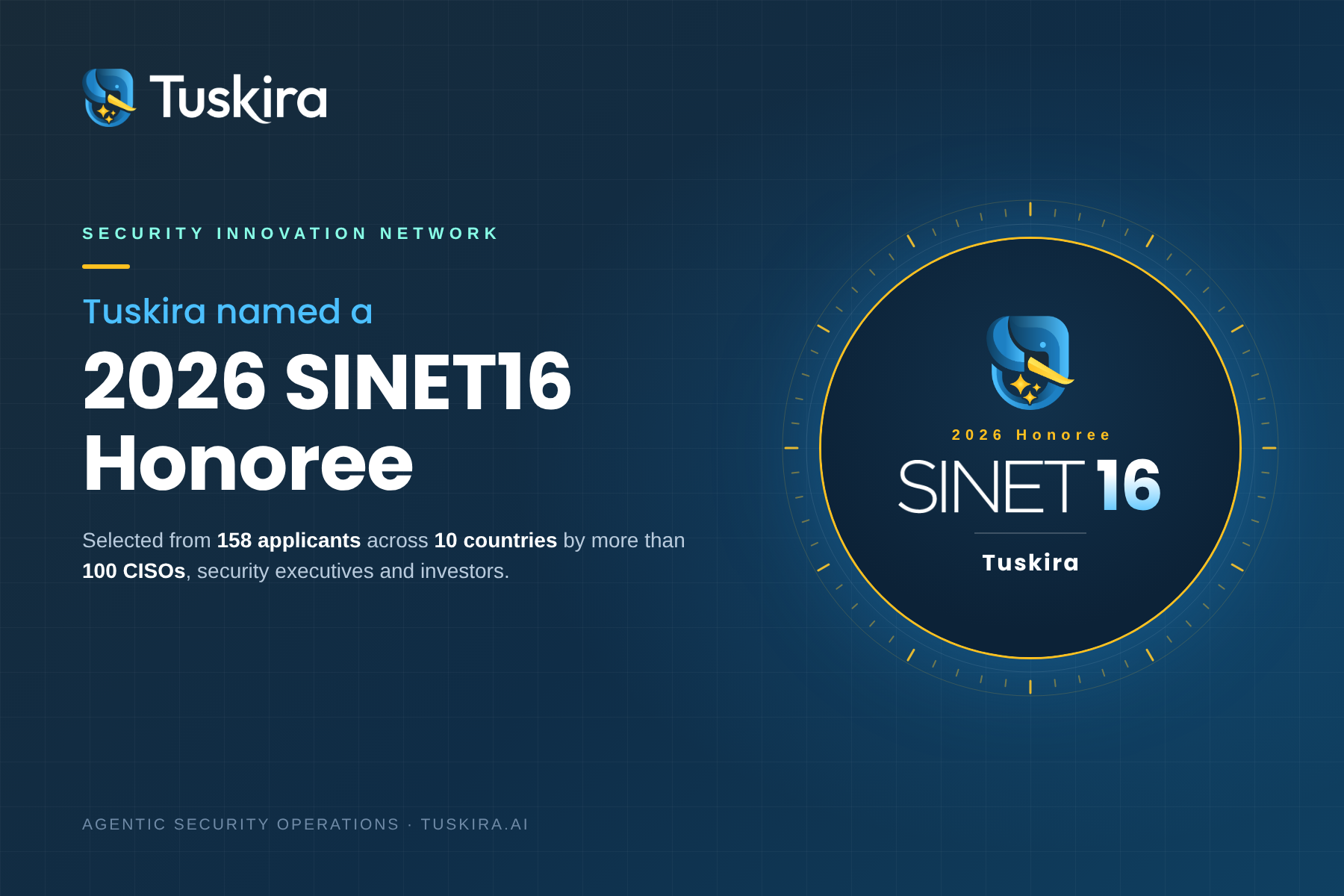
Tuskira has been named a 2026 SINET16 Honoree, one of 16 emerging cybersecurity companies selected this year from 158 applicants across 10 countries.
The SINET16 recognizes companies developing innovative approaches to cybersecurity's most pressing challenges. Honorees are chosen through a multi-stage evaluation by more than 100 industry experts, including CISOs, security executives and investors, which is what makes this one worth writing about. These are people who run enterprise security programs for a living, and they looked at what we've built this year and decided it belonged on the list.

What the recognition is for
Everything we shipped in 2026 was built toward one goal. Security teams already know they have risk. What they need is to know whether an attacker can turn that risk into a breach, and what action will stop them.
"Security teams don't need another system telling them they have risk. They need to know whether an attacker can actually turn that risk into a breach and what action will stop them. That has been the focus behind everything we've built this year: connecting exposure, controls, detections and response so AI agents can reason across the enterprise and help defenders close the paths that matter. Being named a SINET16 Honoree by leaders who understand the realities of running enterprise security programs is meaningful validation of that mission."
Piyush Sharma, CEO and co-founder, Tuskira
A year of building across the security lifecycle
Throughout 2026 we expanded the Agentic Security Operations platform in four directions, each one adding a piece of the context an agent needs to reason about an attack the way an attacker would.
Distributed detection
We introduced the Federated Detection Engine to generate detections across cloud, identity, endpoint, network, SaaS and existing SIEM environments without requiring organizations to centralize all of their security data first.
Breach modeling and zero-day defense
We launched Kairo to continuously model cross-domain breach paths, and Quell to determine whether an emerging vulnerability creates reachable exposure and whether existing defenses can stop exploitation before a patch is available.
Exposure validation and response
We added an Agentic Control Plane for Exposure Management and autonomous red teaming capabilities that validate AI- and scanner-discovered risk against deployed architecture, compensating controls and existing security signals before recommending or orchestrating a response.
Open infrastructure for enterprise AI agents
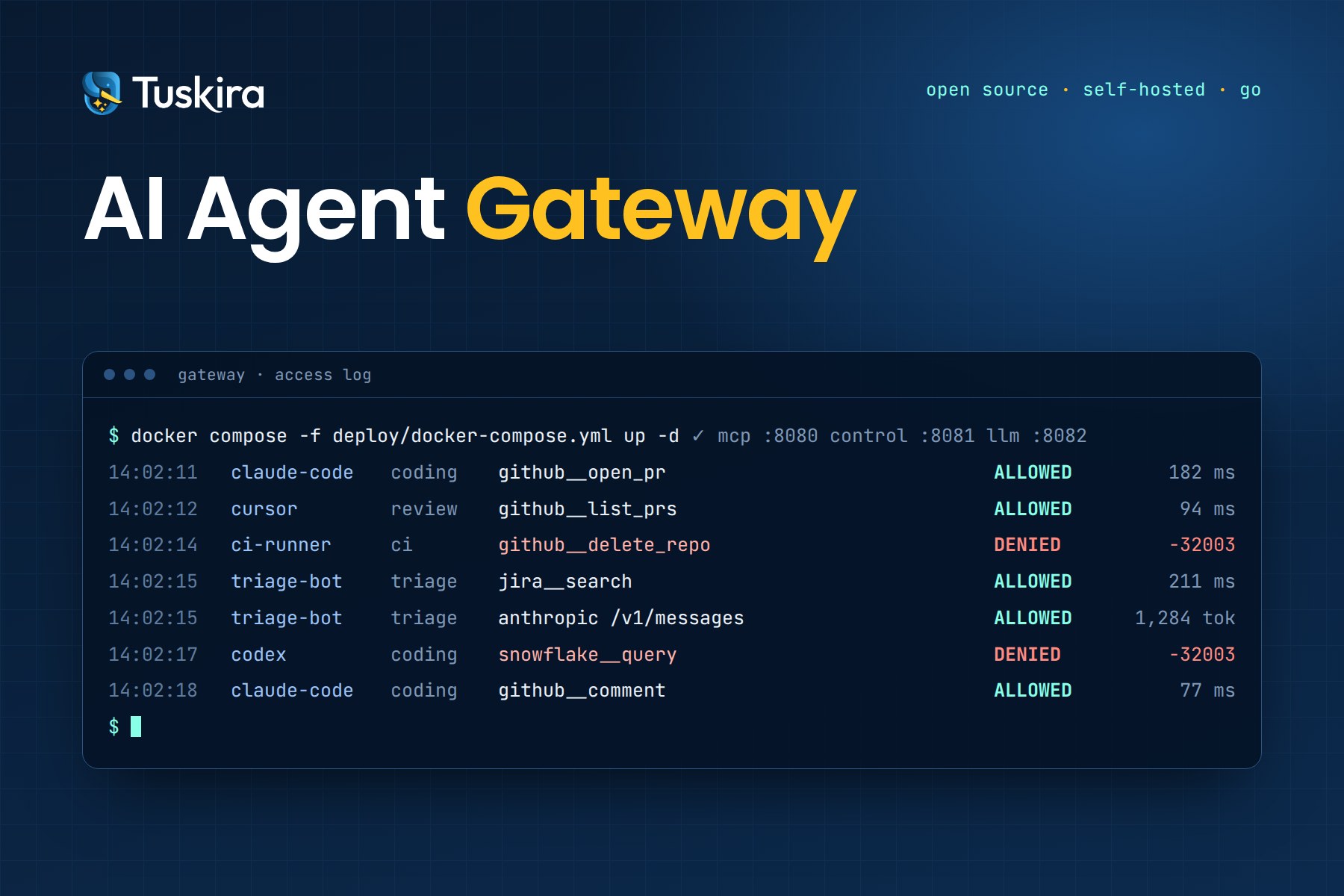
Most recently, we released the AI Agent Gateway as an open-source, self-hosted project. It gives organizations a centralized way to observe agent activity, govern access to MCP tools, route models and track token usage while keeping policies and logs inside their own environment.
What it has done in production
Across Tuskira deployments, breach modeling has deprioritized up to 99% of scanner findings as unreachable and recomputed breach-path maps in minutes as environments change. In one global financial services deployment, Tuskira reduced 12.3 million raw findings to 0.46% requiring action and cut exposure triage from three weeks to 30 minutes.
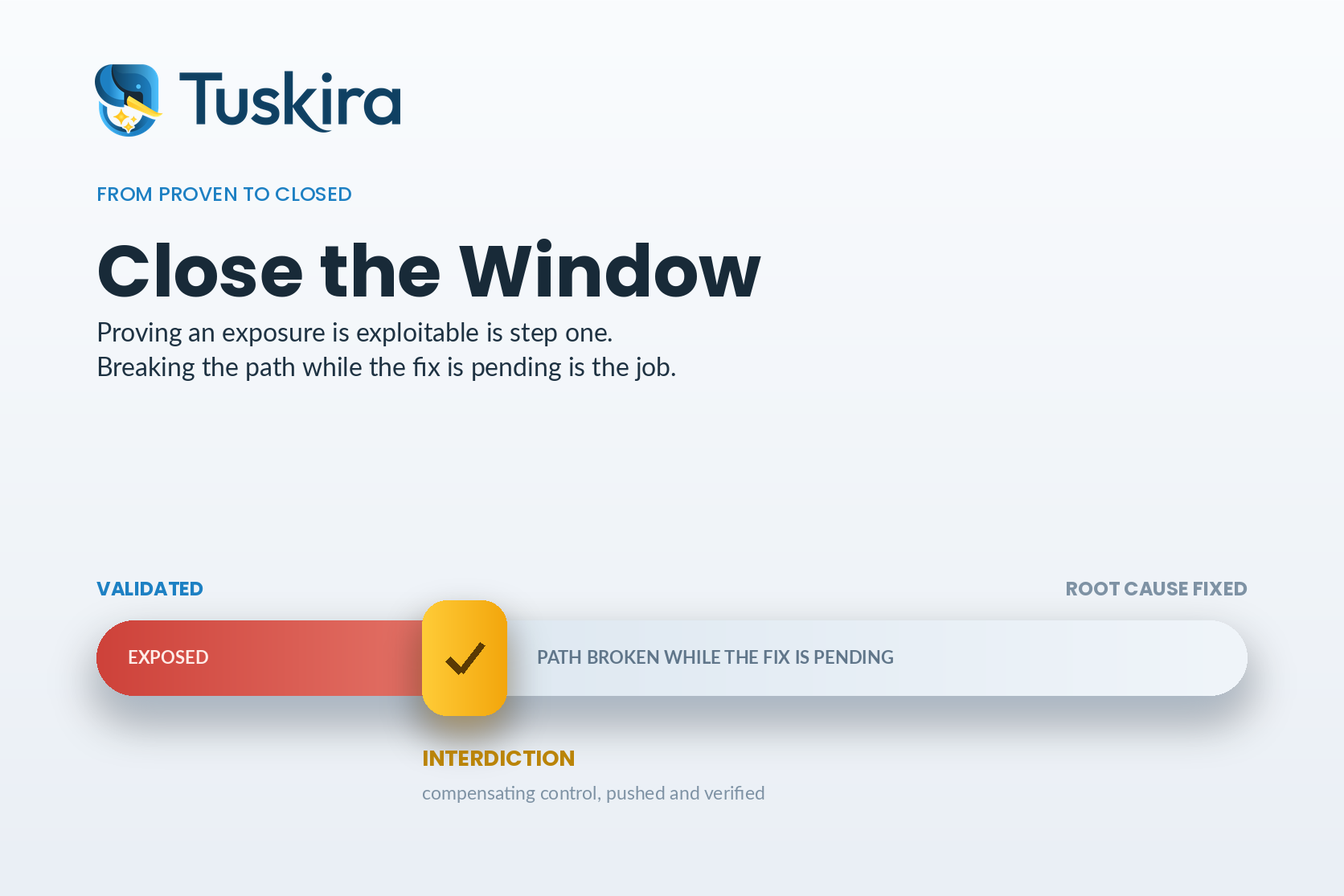
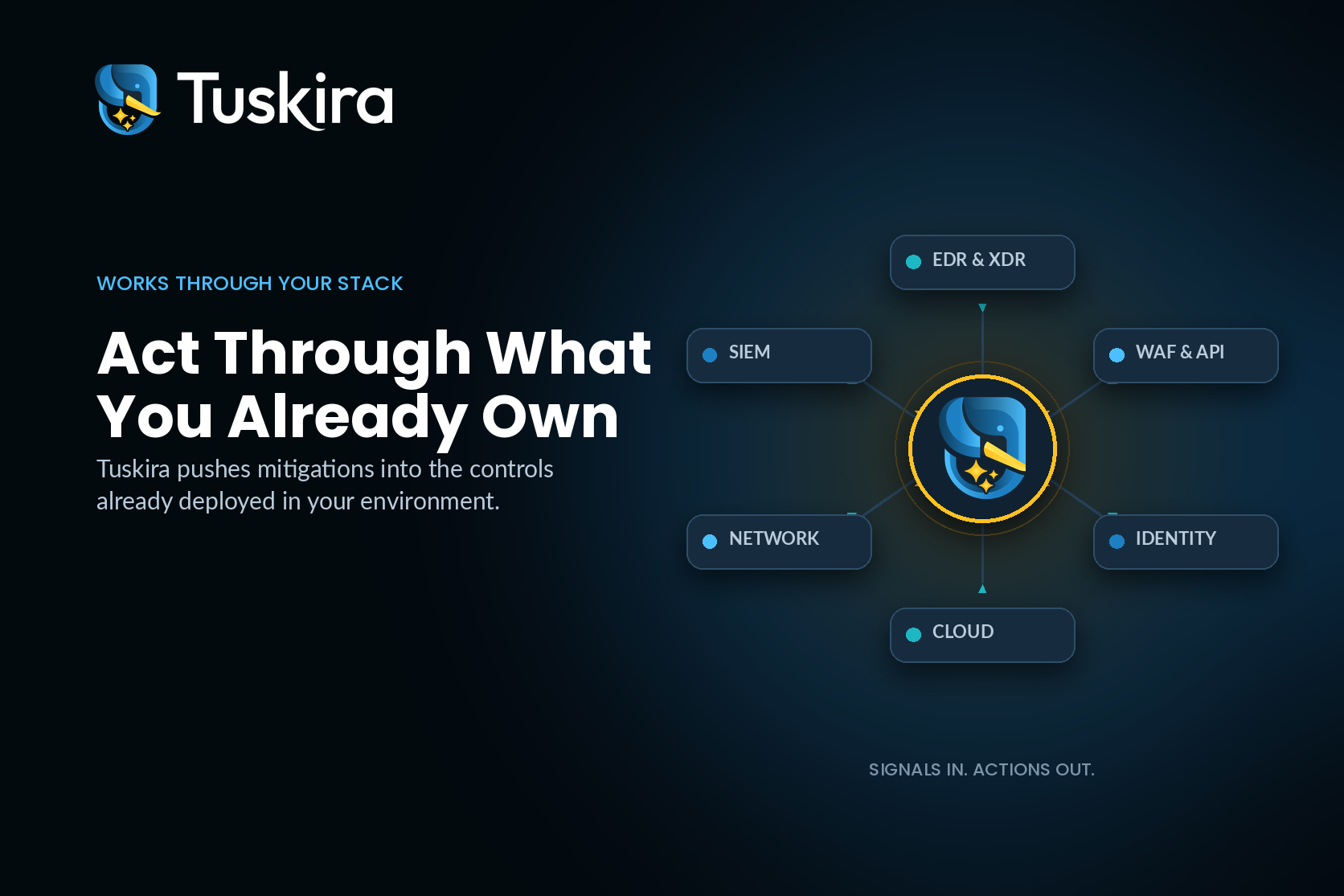
Together these capabilities form a continuous agentic defense loop. Tuskira detects activity, determines whether it creates a viable path to breach, validates the defenses already in place, takes approved action through the tools the team already owns, and verifies that the path is closed.
See us at SINET New York
We'll be at SINET New York on October 8, where security leaders, emerging technology companies and investors gather to talk through the approaches shaping the next generation of cyber defense. If you're attending and want to see how the platform reasons across your own environment, come find us, or request a demo and we'll walk you through it.
Tuskira Open Sources the AI Agent Gateway
Tuskira Named in the 2026 Gartner® Emerging Tech Impact Radar: CSP Infrastructure and Operations