The ARTEX Chain Is Already in Your Backlog
By Tuskira Research
At 10:14 UTC on October 17, an agent began looking at the VPN gateway of a mid-sized industrial company in our demo environment. It gathered email addresses, pulled DNS records, scanned the edge, and found a Palo Alto GlobalProtect appliance still exposed to CVE-2024-3400. At 11:05 it was inside. By 11:33 it was reading live process data from the company’s plant historian, the system that records what every pump, conveyor and sensor in the plant is doing.
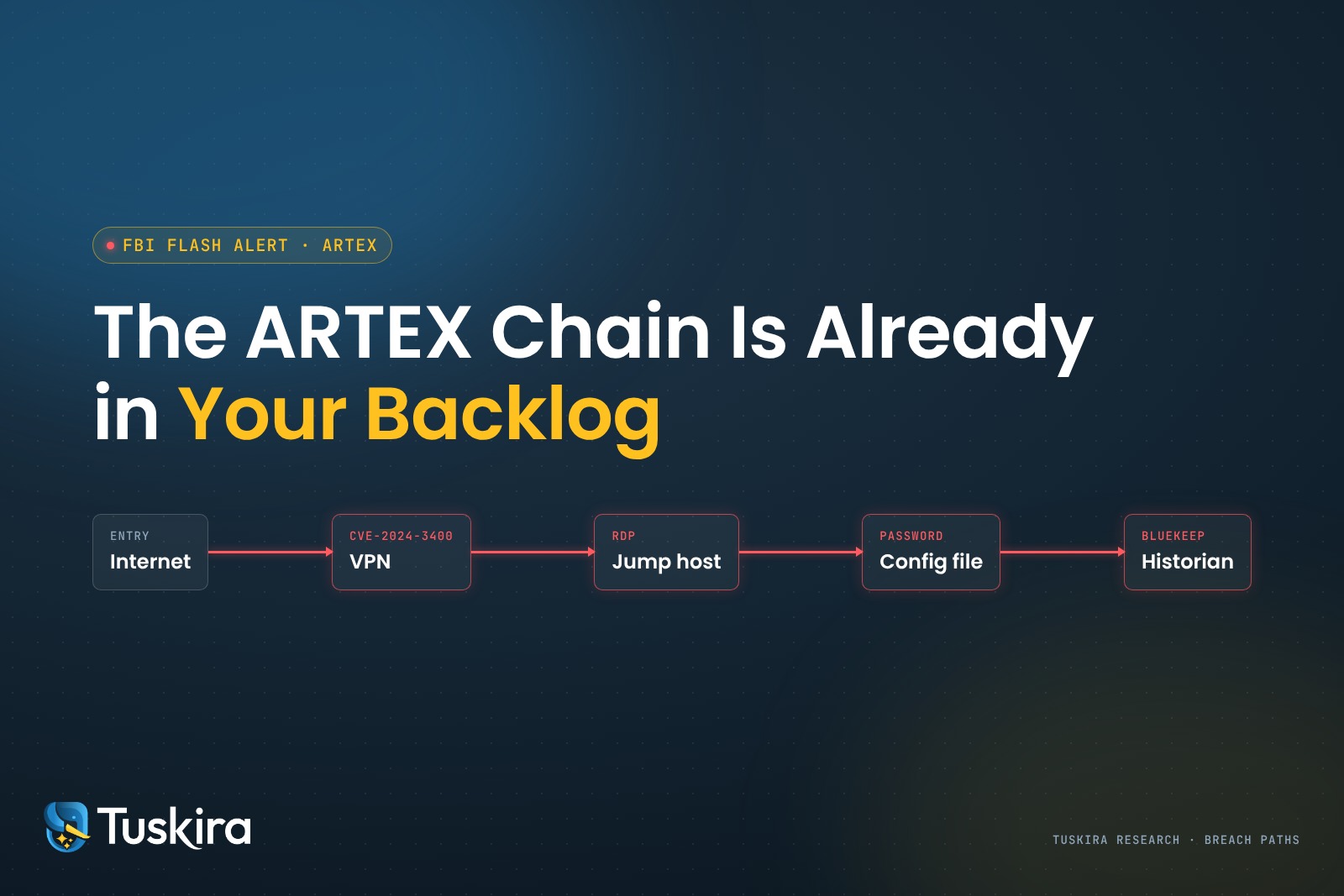
The FBI’s ARTEX alert last week describes the same mechanics. On November 13 the Bureau issued FLASH alert FLASH-20261113-001 on ARTEX, an open-source framework that turns a large language model into an intrusion tool. The FBI says attackers have used it since at least August against finance, government, defense, healthcare and other sectors, chaining known web-facing exploits and stolen credentials fast enough that some intrusions went from initial targeting to privileged access in under three hours. One campaign hit ConnectWise Cloud Backup customers and targeted more than 2,250 downstream Microsoft 365 tenants. ARTEX chains the kinds of weaknesses already sitting in most vulnerability queues, faster than a human team can triage them.
The run in 31 seconds, from the first exploit to the historian. The closing re-test scene illustrates what Vector does after a fix. Demo environment, fictional company.
01What the chain looked like
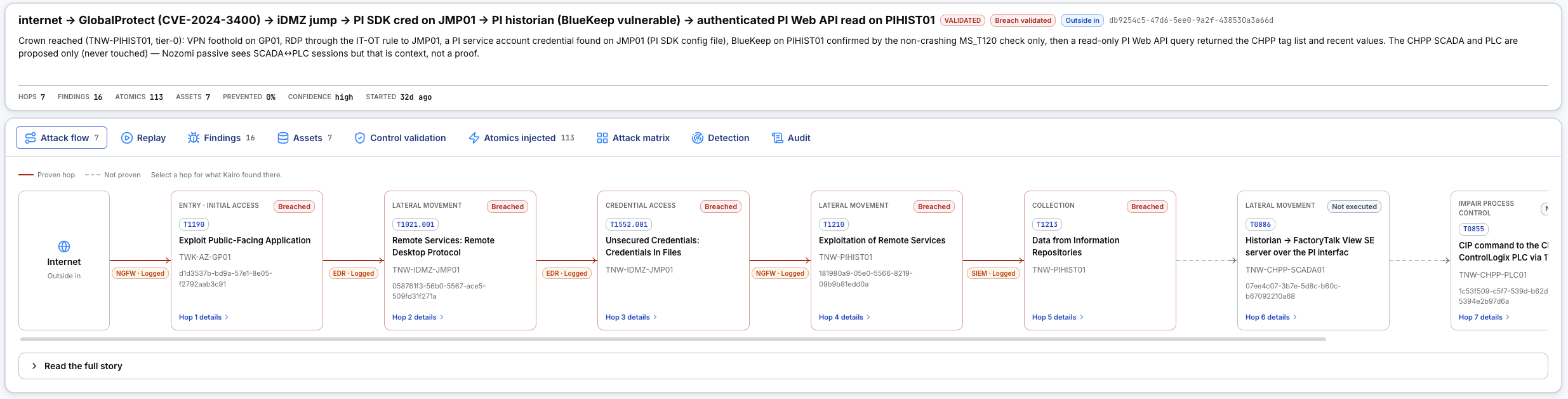
Five hops were proven. The agent exploited the VPN gateway, used RDP through a firewall rule meant to separate the IT and plant networks, found the PI service credential on the jump host, confirmed BlueKeep on the historian with a non-crashing check, and then made a read-only query that returned the plant’s tag list and recent values.
Look at the labels between the hops. The firewall logged the VPN exploit and the BlueKeep traffic. EDR logged the RDP session and the credential pull. The SIEM logged the historian query.
Every control in the path saw something, and the attacker still got through. Tuskira scored the path 0% prevented.
The agent stopped at the historian. The two hops after it, into the SCADA server and the controller that runs the plant, are drawn as dashed lines because they were modelled and never touched. Active testing stops at the boundary between IT and the plant floor, and that boundary is set in the rules of engagement.
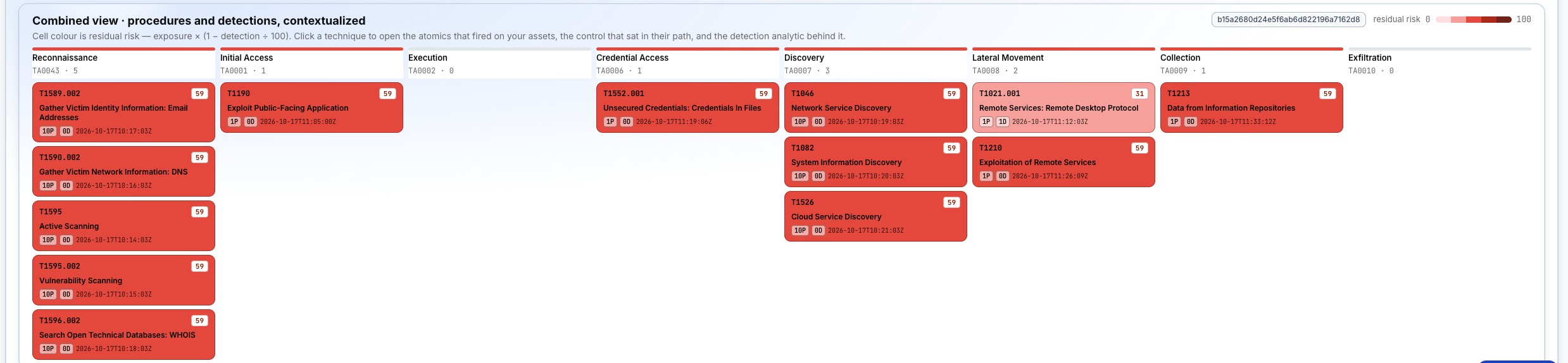
Twenty-eight minutes from the first exploit to the historian data, and seventy-nine minutes from the first reconnaissance. That was an agent working under rules of engagement in our own environment, and it still finished well inside the window the FBI is warning about.
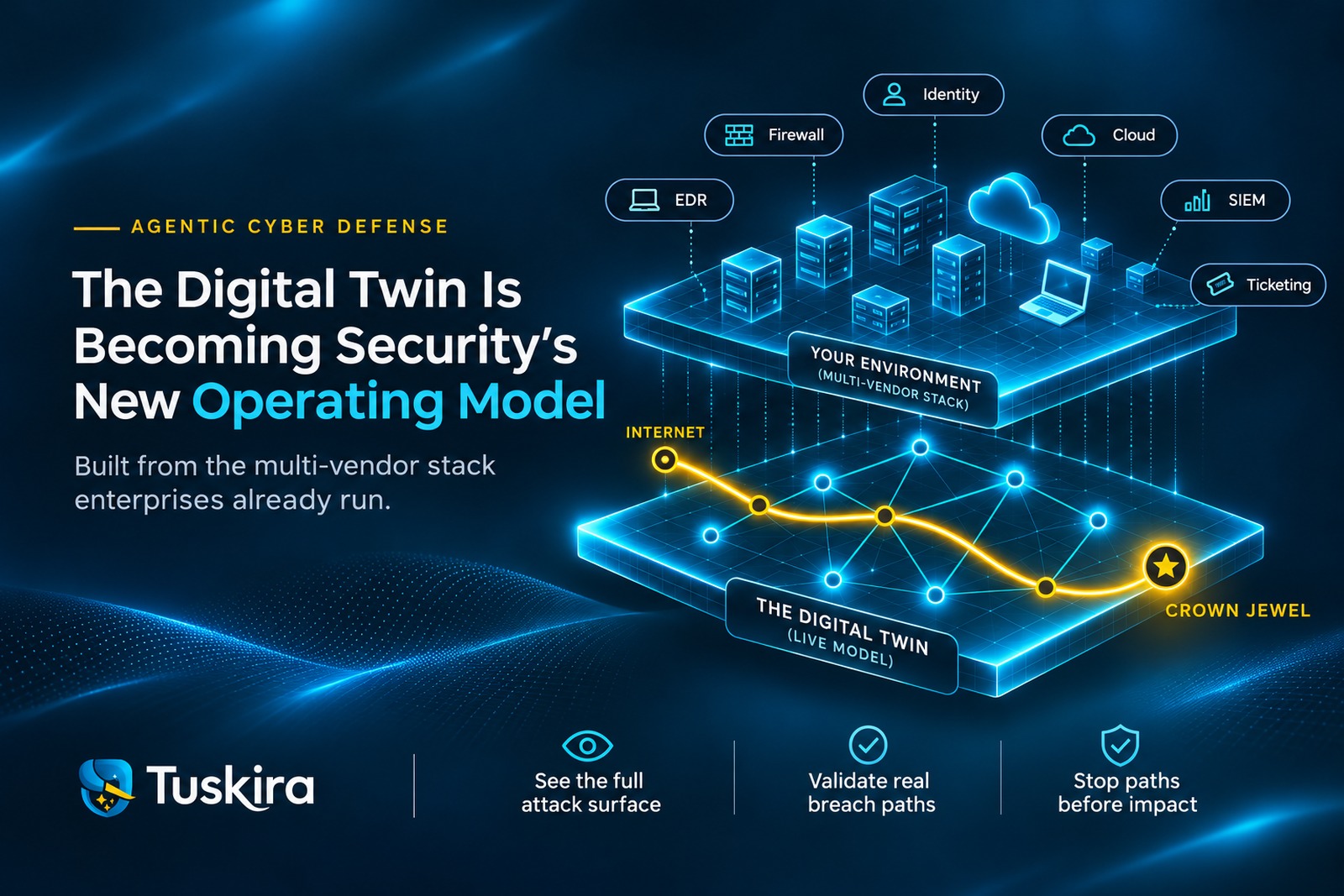
Tuskira can produce this evidence because its digital twin connects findings that normally live in separate tools into complete attack paths, then overlays the firewall, EDR, identity and network controls deployed at every hop.
02Most chains stop, and that matters just as much
The same environment produced other paths that went nowhere, and they tell a defender as much as the one that succeeded.
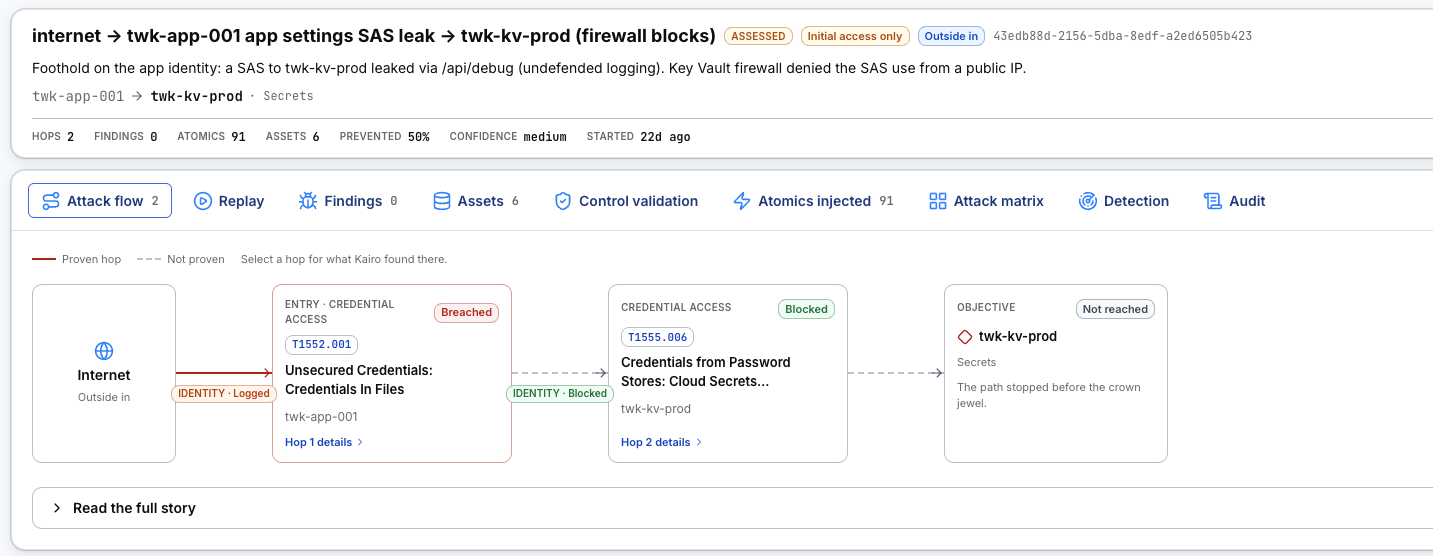
In one, the agent found an Azure SAS token leaking from an unprotected debug endpoint on a web app. That’s a real finding and a real foothold. When it tried to use the token against the production Key Vault, the Key Vault firewall refused the request because it came from a public IP. The path ended before the secrets.
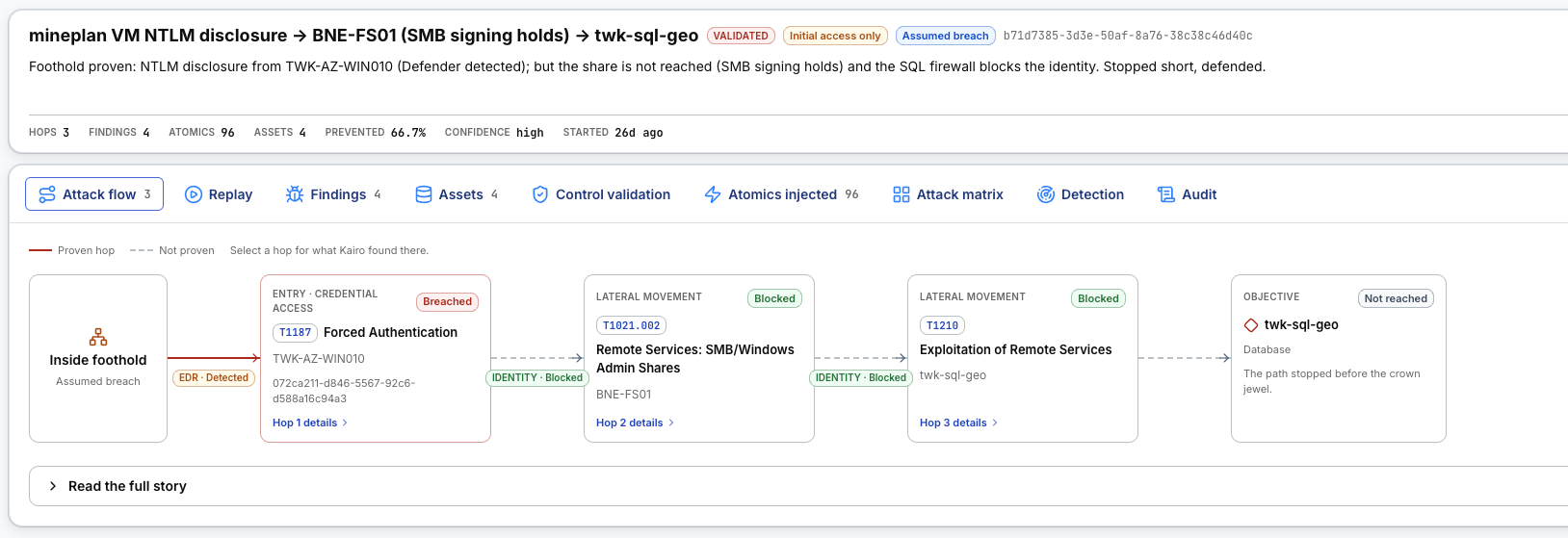
In another, the agent started from an assumed foothold on a Windows server and forced NTLM authentication, which Defender detected. It then tried to move to a file server and a SQL database. SMB signing held on the file server, and the database firewall blocked the identity.
Your security stack would surface the SAS leak, the NTLM exposure, the RDP rule and BlueKeep as four separate findings, each with its own severity. Seen as paths, they sort themselves out. Two end at a control that works. One ends in the plant historian. Across the whole environment the run proved nine attack paths, and this post walks through three of the chains it tested. Removing a single RDP allow in the IT-to-plant firewall rule breaks three of those nine paths, so that’s where the fix goes first.
Knowing which control stopped a chain is as useful as knowing which chain got through. The Key Vault firewall and SMB signing are now controls this company knows it can’t afford to lose in the next change window.
03The defender’s clock
The FBI has documented ARTEX-enabled intrusions reaching privileged access in under three hours. Most security teams need days or weeks to decide whether a single finding matters, because the queue is full and every critical finding looks equally urgent. At one global financial services firm running Tuskira, the team had 12.3 million findings. Tuskira cut that to 0.46% actionable and brought the time from signal to verdict down from three weeks to 30 minutes.
The last step is proof. When a fix goes in, Vector runs the same attack again. If the path still opens, the finding stays open. If it’s closed, the team has evidence it can show an auditor or a board.
04Three questions for Monday
- Which of the findings you’ve rated medium sit on a path to something you can’t lose?
- On your most important path, which control stops the attacker, and has anyone tested that it does?
- After the last fix your team shipped, did anyone re-run the attack?
The intrusions in the FBI alert reached privileged access in under three hours. If your answers take longer than that, the attacker has the advantage.
Bring one finding you’re worried about. We’ll show whether it opens a path, which controls hold or fail, and what closes it.
See a breach path in your environment →Sources: BleepingComputer, Nov 15, 2026; The Record; TechCrunch, Nov 16, 2026; RedEye Security; FBI FLASH alert FLASH-20261113-001, Nov 13, 2026.
The Digital Twin Is Becoming Security's New Operating Model
The Best Attack Path Analysis Tools in 2026