Accountability for Autonomous AI Actions Is Boring, but It’s the Whole Game
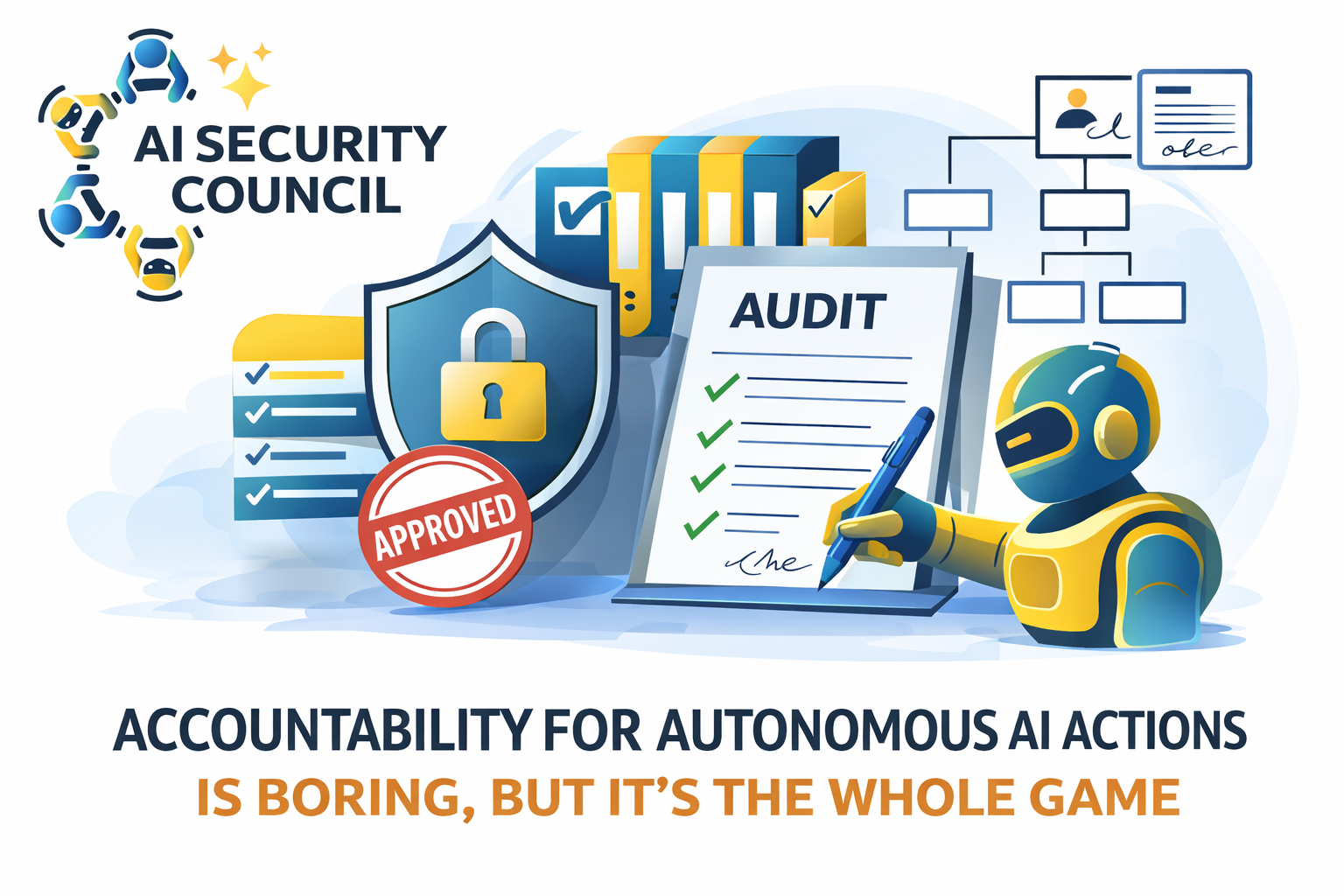
Nothing is exciting about accountability. It doesn’t demo well. It doesn’t sound innovative. And yet, every meaningful discussion about autonomous AI in cyber defense ultimately comes down to this: if an AI system takes action, the business owns the outcome. Not the model, the vendor, or the algorithm. The enterprise.
That point came through clearly in the AI Security Council discussion. Autonomous decisions don’t create a new category of responsibility, but they do amplify existing ones. Just as an organization is accountable for the actions of its employees and automation systems, it is accountable for the actions of AI it authorizes to operate in its environment. The difference is whether ownership of the risk is explicit, documented, and defensible.
The real differentiator isn’t autonomy, though; it’s governance maturity. Can the organization clearly document what the system was allowed to do, where it was allowed to operate, and under what conditions it could act without human approval? Can it show who signed off on that scope, which risks were accepted, and how those decisions map to impact tiers? These details are tedious, but they’re what separate a conscious business decision from negligence when something goes wrong.
Change management is where many autonomy programs are quietly failing. AI systems evolve. Models are updated. Inputs shift. Permissions creep. If those changes are not treated as material modifications requiring re-acknowledgement, the original approval becomes meaningless. Several panelists emphasized that autonomy is not approved in one go. It’s approved continuously. Each expansion in scope or privilege changes the risk profile and must be re-owned by the business.
Tiered approvals help keep this process workable. Low-impact, reversible actions can be approved and monitored at the operational level. Higher-impact actions that affect customers, finances, or core systems must escalate to leadership and, in some cases, the board. This is not bureaucracy for its own sake; however, it’s how organizations preserve speed where it is safe and friction where it is necessary.
Autonomous response without auditability is exposure. If an organization can’t answer basic questions after the fact, like what was approved, what evidence was used, what changed, and who was responsible, then it was never ready to let the system act on its behalf in the first place.
This piece came out of an AI Security Council working session, and the accountability thread runs through everything the Council has published since. For how these ideas become a working governance model, with authority bounded up front and every autonomous action leaving a tamper-evident record, read Human in Every Loop Is Not AI Governance. Upcoming Council sessions are listed on the AI Security Council page.
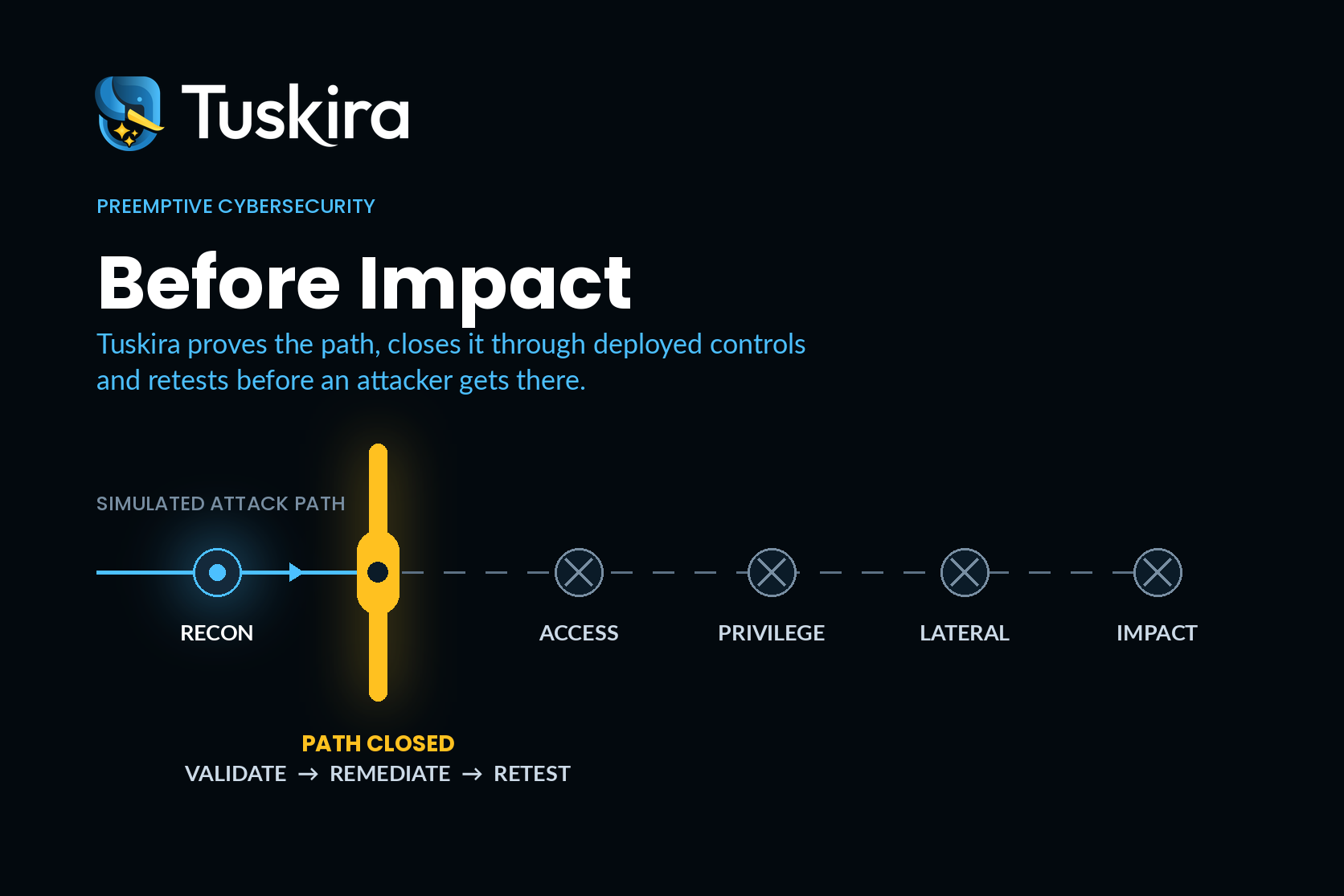
Tuskira Named in the 2026 Gartner® Emerging Tech Impact Radar: Preemptive Cybersecurity
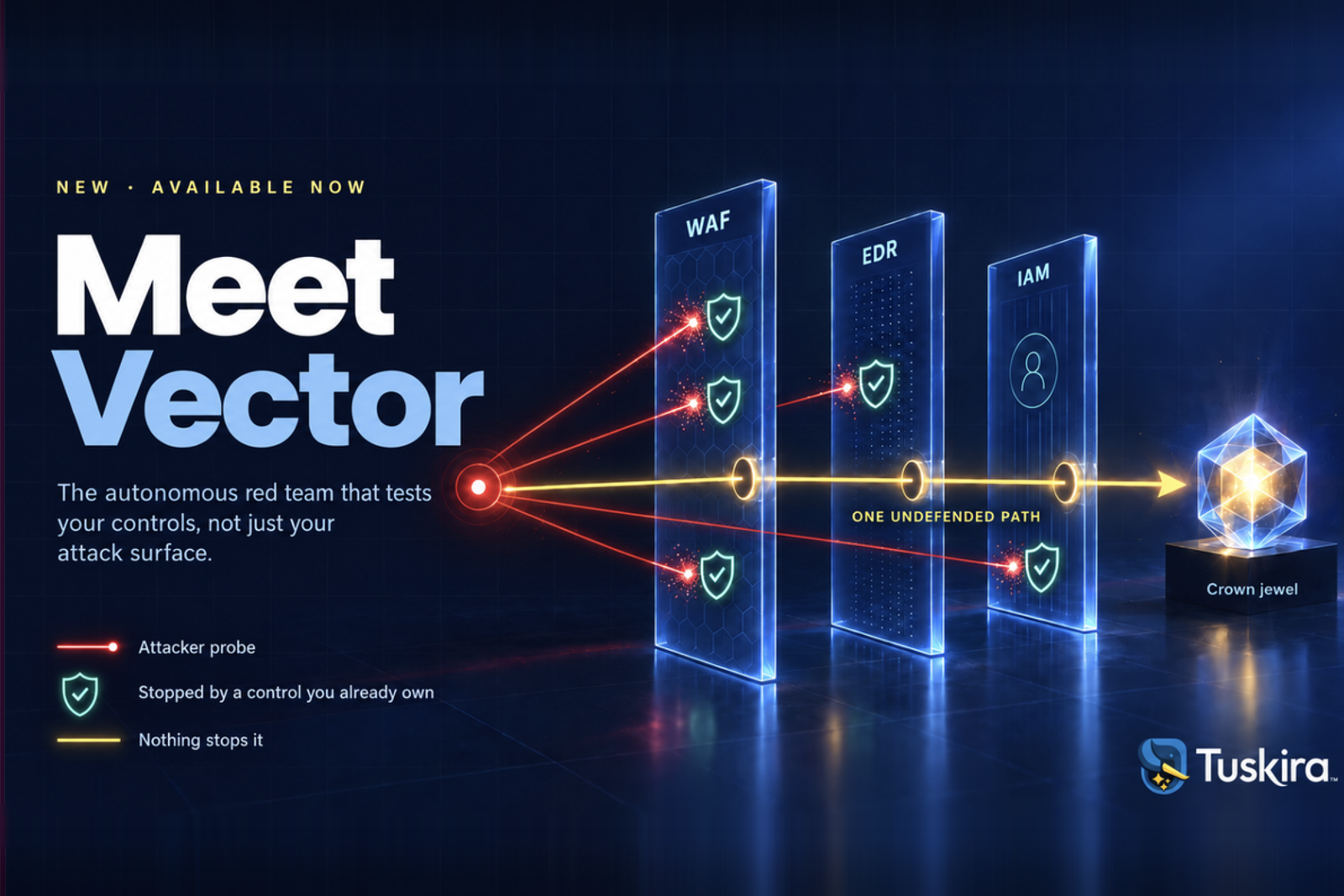
Meet Vector: Autonomous Red Teaming That Doesn't Stop at Exposed