Why Gartner’s AI Agent Reasoning Report Matters for Security Operations
Gartner recently published Emerging Tech: AI Vendor Race: Future of AI Agent Reasoning, and Tuskira was mentioned as one of the sample vendors building and innovating on top of reasoning models.
It’s not like an analyst report mention by itself changes the security market; however, the bigger signal is that reasoning is becoming a foundation for the next generation of AI agents, and security is one of the domains where that foundation matters most.
Security operations has never suffered from a lack of signals, but it does suffer from a lack of connected judgment.
Vulnerabilities arrive in one queue. Identity risk lives in another. Cloud exposure, endpoint telemetry, firewall policy, SIEM alerts, compensating controls, business context, and threat intelligence all sit in separate operational lanes. Security analysts then have to stitch the picture together under pressure, often after the attacker has already found the path between those systems.
Agentic security changes that only if the agents can reason.
Why Reasoning Matters for Security Agents
The Gartner report argues that reasoning models are becoming foundational to AI agent orchestration. In plain terms, an orchestrator is the system that decides what an agent should do, which specialized agents should be called, what sequence they should follow, and when the work is good enough to act on.
In security, an agent may need to inspect a vulnerable dependency, determine whether the affected code path is reachable, correlate identity permissions, check whether the service is internet-facing, evaluate existing controls, generate a detection, and recommend a mitigation that will not break production. Each step changes the next step, and that’s the whole point.
A security agent that can’t reason across context will either overreact or underreact. It’ll flood the team with another version of the same alert queue, or it’ll confidently miss the breach path hiding between tools.
The future belongs to agents that can plan, evaluate, adapt, and explain.
The Shift From General Agents to Expert Agents
One of the most important ideas in the report is the move toward domain-specialized reasoning. General-purpose agents are useful. Expert agents are different.
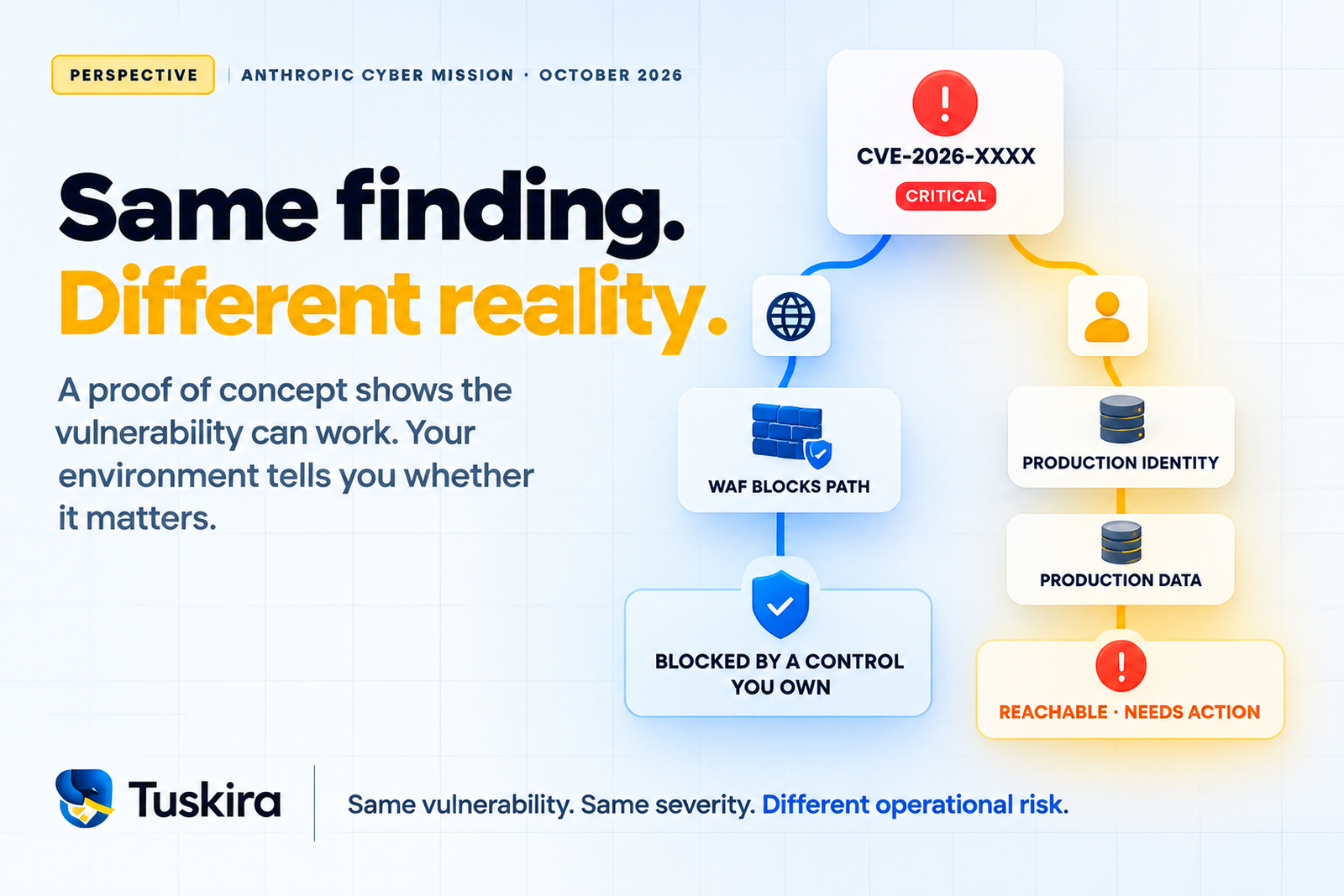
An expert security agent must understand the operational realities of a modern enterprise. It needs to know that a critical CVE in an unreachable code path may be less urgent than a medium-severity weakness on a trusted CI/CD route with access to production secrets. It needs to reason over attack paths, and that’s where Tuskira fits in.
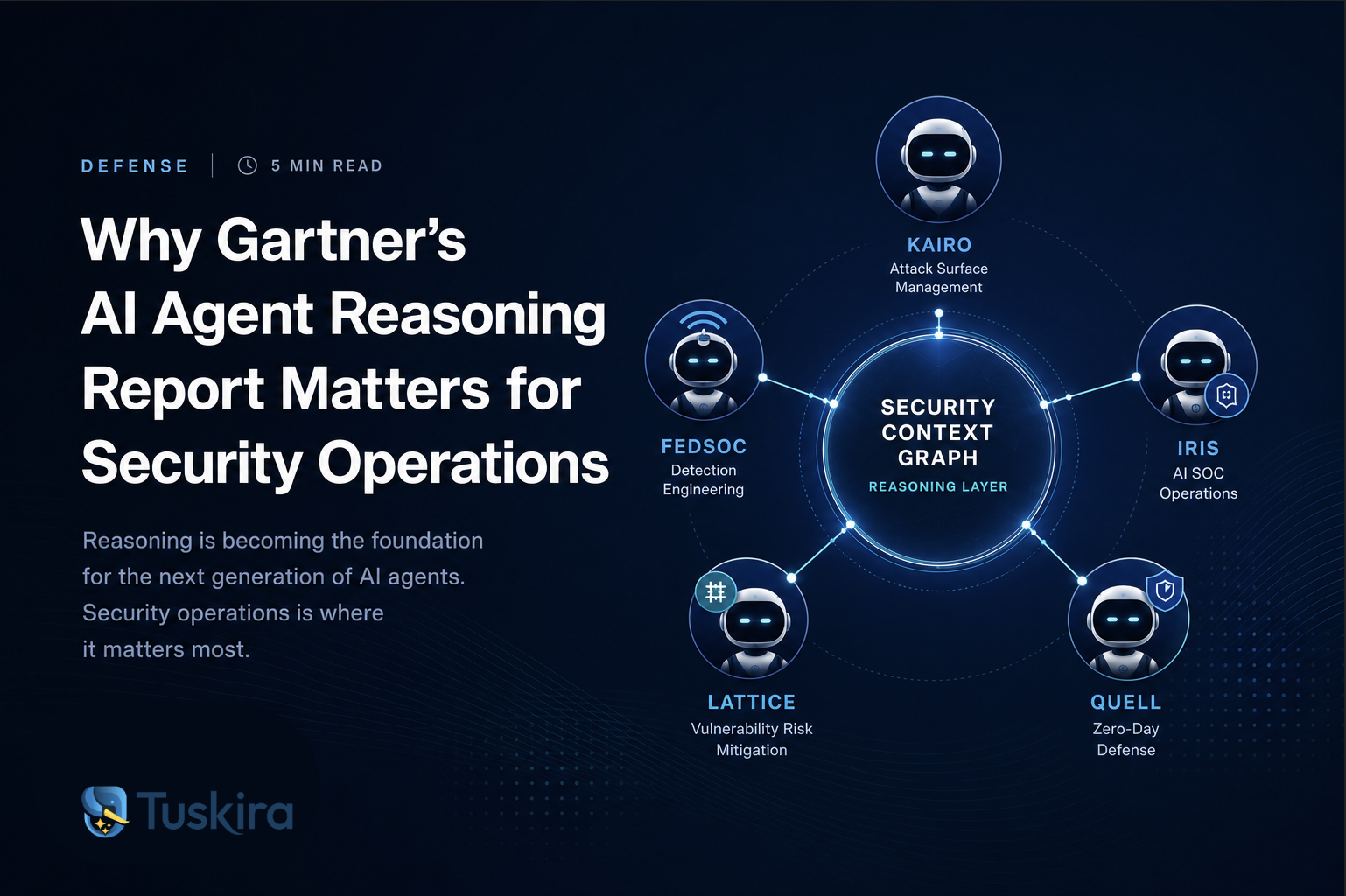
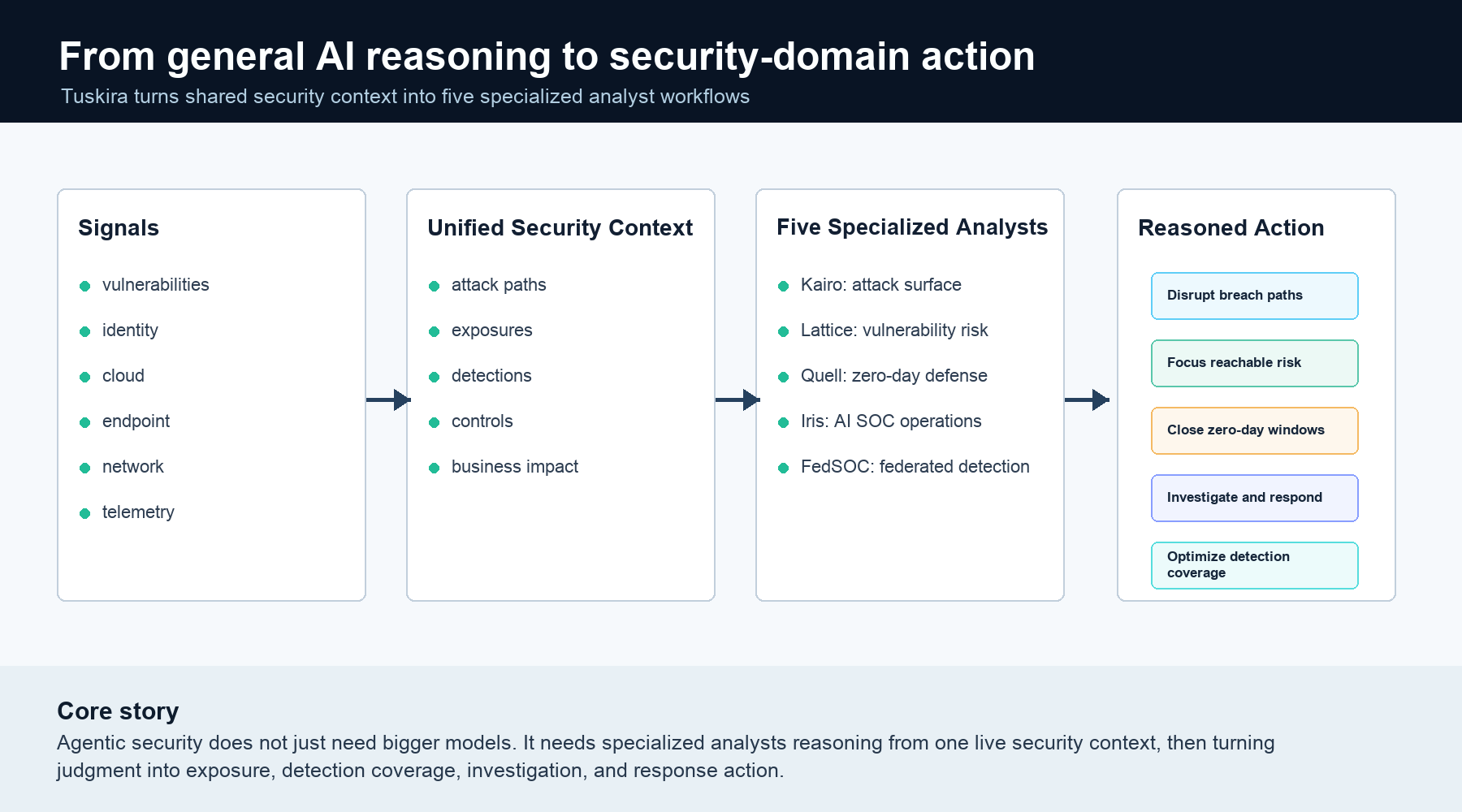
Tuskira was built around the belief that modern defense requires a shared reasoning layer across the security stack. Our Security Data Fabric and digital twin connect the assets, identities, vulnerabilities, exposures, detections, controls, telemetry, and business context that typically live in silos. Kairo maps how exposures, identities, workloads, and controls chain into real attack paths. Lattice reduces vulnerability backlogs to the subset that is publicly exposed, exploitable, and reachable. Quell determines whether newly disclosed vulnerabilities create a reachable path and identifies the compensating control change that closes it before it can be exploited. Iris brings L1 triage, L2 investigation, and response into one workflow. FedSOC operationalizes federated detection across distributed telemetry, so detection logic can execute where the data lives without forcing centralized log collection.
The result is operational reasoning for security teams that no longer have enough time to manually piece the picture together.
Security Needs Orchestration, Not Another Queue
Most security products still hand the customer a list.
- A list of vulnerabilities.
- A list of misconfigurations.
- A list of alerts. A list of attack paths.
- A list of suspicious identities.
Lists are useful, but they don’t defend anything on their own. The hard part is deciding what to do first, what can wait, which control buys down the most real risk, and which finding looks severe but is not actually reachable in the environment.
That decision requires orchestration, and a reasoning-driven security orchestrator has to answer questions like:
- Is this exposure reachable from an attacker-controlled path?
- Which identities, services, and assets make the path viable?
- Would the current EDR, WAF, firewall, IAM policy, or detection logic interrupt the attack?
- If the patch is not ready, what compensating control can reduce breachability now?
- Can we document the decision well enough for the CISO, the auditor, and the incident team?
Take a hard look at that last bullet point. Security leaders are trying to move faster, but more importantly, they’re trying to do so without compromising evidence, governance, or trust.
Reasoning enables agents to work through that complexity. Domain context gives them the ability to be right often enough to matter.
The Post-Mythos Lesson: Speed Alone Is Not the Strategy
AI-driven vulnerability discovery has already changed the tempo of defense. The issue isn’t merely that more vulnerabilities will be found. The issue is that discovery, weaponization, and operational exploitation are compressing into a much shorter window.
Patching still matters and it always will, but patching alone can’t be the survivability strategy when attackers can chain weaknesses across identity, cloud, endpoint, network, and application layers faster than human-led workflows can coordinate a response.
This is why reasoning belongs at the center of agentic SecOps. Security teams need agents that can move from signal to judgment to action. They need to know which exposures are genuinely breachable, which controls hold, which ones fail silently, and which mitigations can be pushed into production without waiting for a perfect fix.
The winning pattern isn’t "replace the analyst." It’s to give the analyst, engineer, and CISO a live decision loop that keeps pace with the environment.
Why Tuskira Was Mentioned
Tuskira was mentioned because the problem we’re solving sits directly inside this market shift. Reasoning models make agents more capable. Domain-specialized reasoning makes them useful in complex operational environments. Security is one of the clearest examples, because every meaningful decision depends on context that crosses systems, teams, controls, and time.
Tuskira's platform was designed for that, as it doesn’t ask enterprises to rip out the tools they already use. It reasons across them. It doesn’t stop at identifying a risk. It validates the path, tests the control, generates detection coverage, and helps teams decide whether to patch, mitigate, monitor, or defer, backed by evidence.
That’s the practical version of agentic security. Not a generic assistant sitting beside the SOC, or another dashboard. A reasoning layer that understands how attacks move and how enterprise defenses actually work.
What Security Leaders Should Take From the Report
The most important takeaway is that AI agent reasoning is becoming a competitive requirement, but not all reasoning will be equal.
For security leaders, the questions should become more specific.
- Can the agent reason over the live environment, or only over static documentation?
- Can it explain why one vulnerability matters more than another?
- Can it validate controls rather than assume they work?
- Can it coordinate across detection, exposure management, investigation, and response?
- Can it operate inside the tools the enterprise already owns?
Those are the questions that separate useful security agents from impressive demos.
The agentic security market is moving quickly, and the organizations that benefit will be the ones that treat reasoning as an operational capability. They will connect it to live context, governed action, and measurable reduction in breachable risk.
That is the work Tuskira is doing, and that is why this Gartner mention matters.
Want to see how Tuskira reasons across your existing security stack? Request a demo and see how the Security Data Fabric, Kairo, Lattice, Quell, Iris, and FedSOC help teams reduce breachable risk at AI speed.
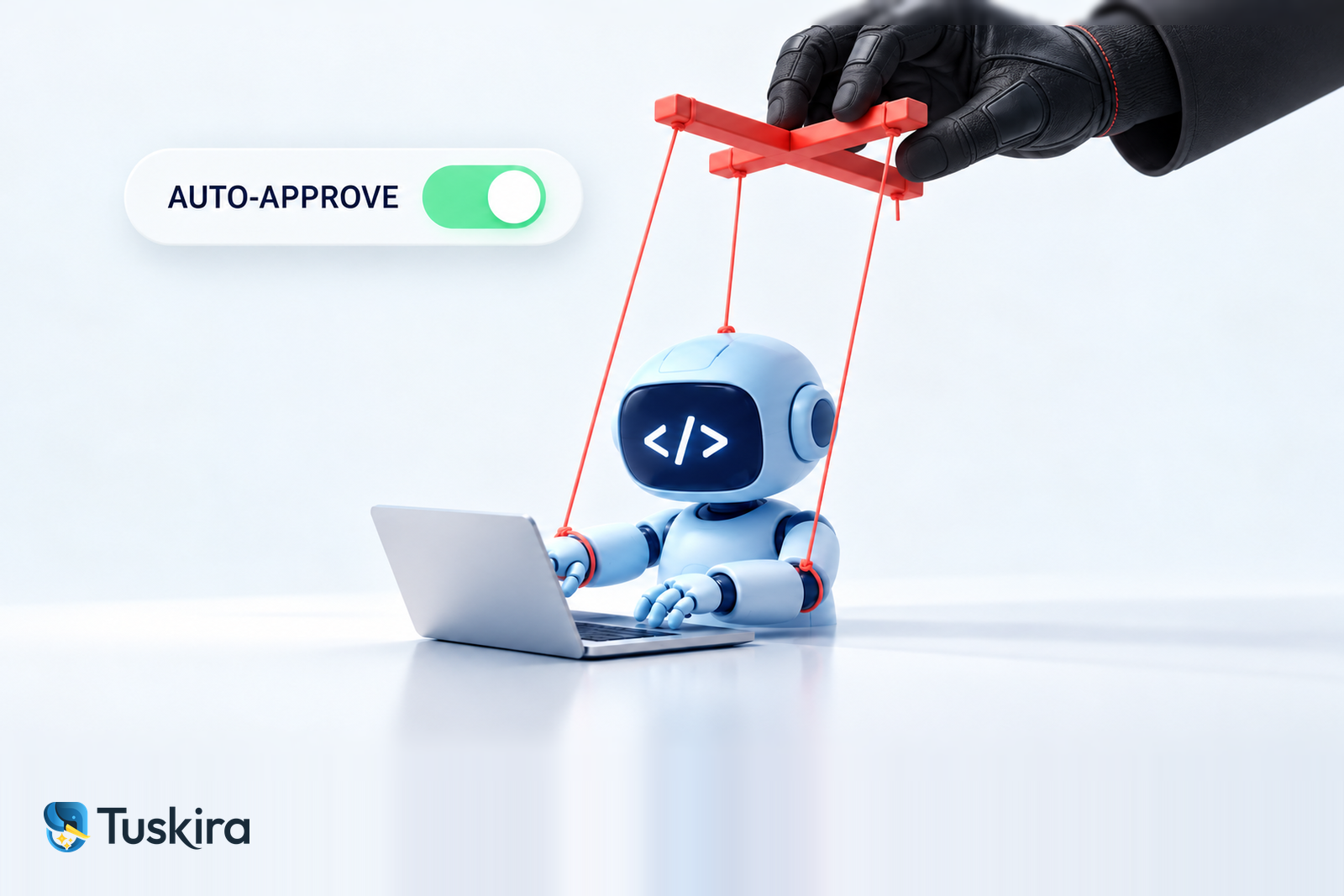
Attackers Are Using AI. Should Your AI Agents Be Auto-Approving Their Next Move?
Anthropic on Finding Vulnerabilities Becoming the Easy Part