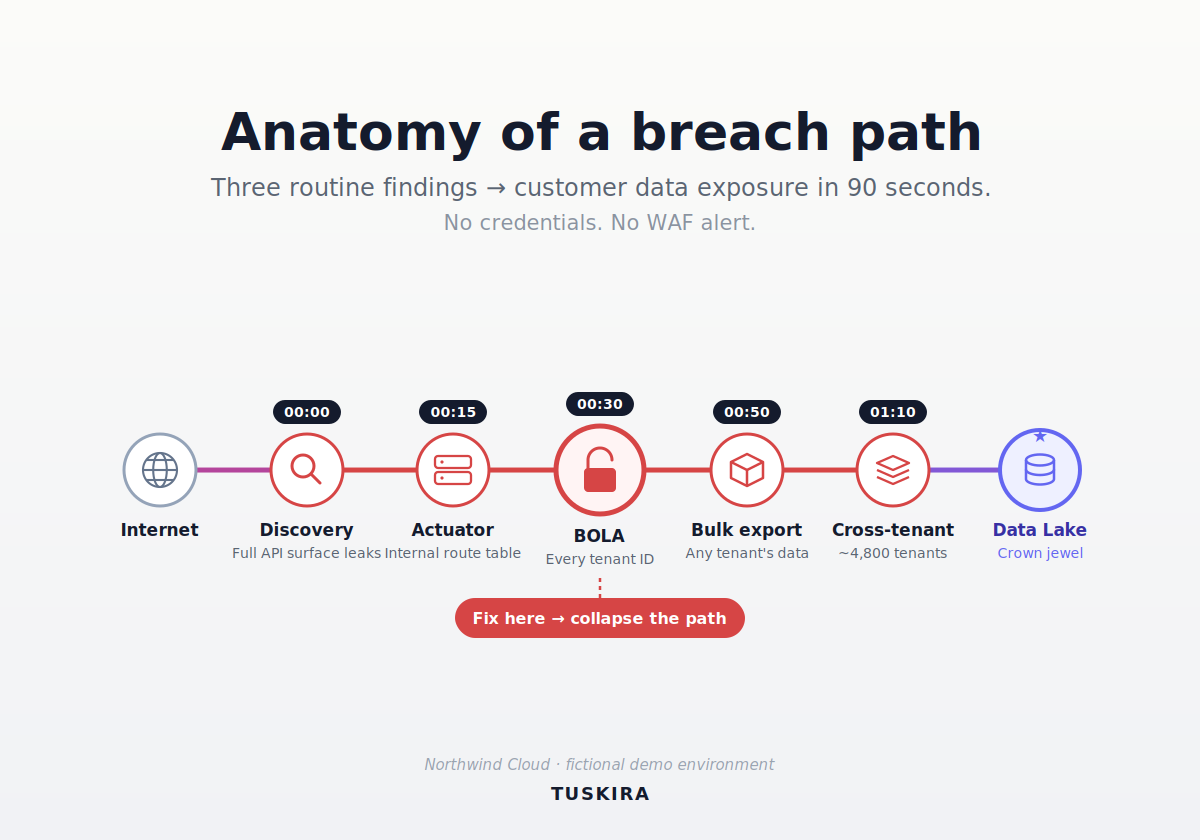
When Machines Started Talking Back: A Story About AI Security
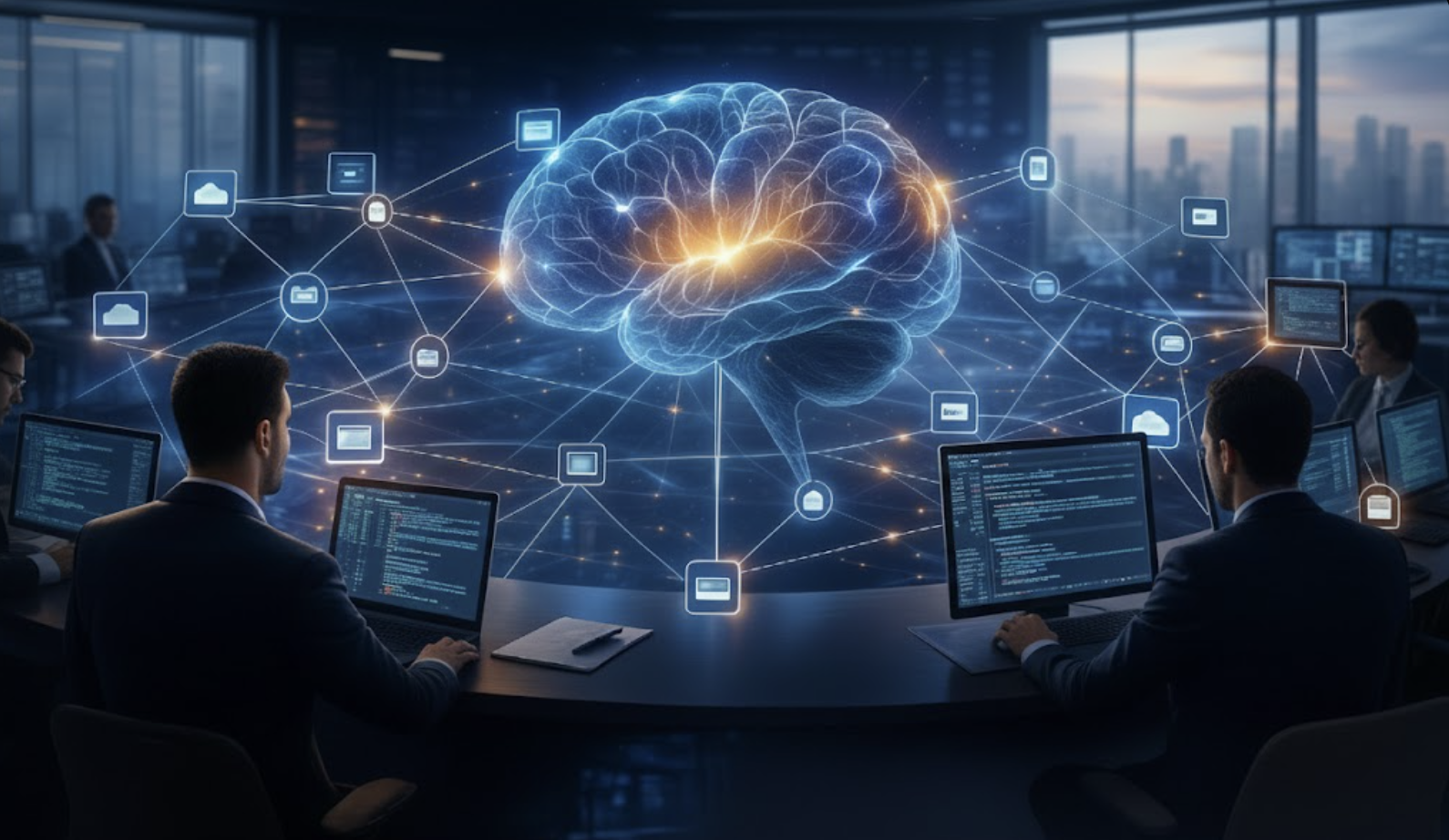
A Tuskira perspective on Gartner’s Emerging Tech Impact Radar: AI Cybersecurity Ecosystem (2025)
Most Gartner reports ease you in. Diagrams. Rings. Careful framing. This one does not. This one marks the moment AI stopped being a polite assistant and started operating like a teammate with the authority to make decisions you didn’t sign off on.
The day Gartner released the 2025 “Emerging Tech Impact Radar: AI Cybersecurity Ecosystem,” it confirmed that the perimeter has shifted. Your attack surface thinks now. And it thinks faster than your team.
So let’s walk through what this report really says.
The First Signal: Your environment is already full of AI you did not approve
Picture a CISO walking into the SOC. Half the team has Copilot tabs open. Someone is pasting internal configs into a chatbot to “summarize it.” A developer just wired a LangChain agent into staging because it “saves time.” Marketing embedded an AI widget on the website without telling anyone.
This is shadow AI.
Gartner calls it out directly. Over 80 percent of enterprise software already has AI embedded. And less than 10 percent of organizations have anything resembling AI usage control.
That means your data is flowing into places you don’t know. Models you didn’t configure. APIs you never vetted. And all of it creates a quiet but very real threat surface. One prompt. One jailbreak. One exposed dataset.
The Second Signal: The pipeline is now part of the threat model
For years, we worried about CI pipelines exposing secrets or allowing supply chain compromise. Now the pipeline itself can be a source of risk. Training data. Eval sets. RAG indexes. Agent memory. Every notebook. Every embedding store. Every third-party inference API.
A poisoned dataset can become a production incident six months later. A manipulated eval set can produce a silent backdoor. A compromised MCP server can rewrite how downstream agents behave.
This is no longer “AppSec, but with bigger math.” It is an entirely new supply chain.
The Third Signal: Runtime is where things blow up
In every industry, similar questions are showing up at board meetings:
“What protects the AI once it is live?”
Gartner’s report paints the picture that AI runtime defense will be one of the highest-mass, shortest-range categories in the entire radar.
Runtime is where attackers experiment because no one is watching.
- Prompt injection.
- CoT leaks.
- Multimodal payloads.
- Fine-tuned assistants drifting outside guardrails.
And every company deploying AI in production will need real-time inspection, guardrails, anomaly detection, and policy enforcement, unlike anything we’ve used before.
The Fourth Signal: Agentic AI is coming fast, and it is going to change everything
This is the part of the report most people will skim over. It’s also the part that will reshape cyber defense in the next decade.
Agentic AI is two battles at once.
1. Agentic AI for Security
- Agents doing the work analysts cannot get to.
- Investigating alerts. Triaging signals.
- Talking to tools. Running scripts.
- Closing the gaps left by team shortages.
2. Agentic Ecosystem Security
- Protecting the agents themselves.
- Securing MCP servers.
- Watching agent memory.
- Monitoring toolchains.
- Auditing agent-to-agent handoffs.
Agents are not “scripts with an LLM.” They are semiautonomous decision-takers. They are workflows with a brain attached. If you can compromise an agent, you can compromise everything it touches.
According to Gartner, by 2029, more than 50 percent of successful attacks against AI agents will result from access control failures and prompt injection. Half of future breaches will occur in systems that did not exist five years ago.
Let that sink in.
The Fifth Signal: Simulation becomes the new reality check
The old security world validated risk by scanning. The new world validates risk by simulating it.
Gartner places intelligent simulation in the center ring. A new category with high mass and fast movement.
Why?
Because the only way to understand how AI behaves under pressure is to test it, and the only safe way to test it is inside a digital twin that mirrors your environment.
This is where the future shifts from “detect breaches” to “predict breaches.” From “respond once hit” to “harden before hit.” From “triage alerts” to “eliminate entire classes of attack paths.” If the SOC was built for logs, the next SOC will be built for simulation.
The Sixth Signal: Synthetic data becomes the engine of the new AI-security loop
Synthetic data is no longer a buzzword. It’s how we create scenarios that real attackers haven't written yet. Gartner predicts 80 percent of AI data will be synthetic by 2028.
Think about how transformative that is.
- Training agents on edge cases.
- Building attack paths before they exist.
- Testing runtime behaviors.
- Evaluating hallucinations.
- Generating adversarial probes.
- Reinforcing guardrails.
- Training DSLMs for niche environments.
Synthetic data is how you prepare for an adversary who uses AI to invent new techniques every week.
So, where does Tuskira fit in all this?
This is the moment where I could pitch you. But let me tell you the truth instead.
The reason Gartner’s radar resonates so deeply with us is that we have been living inside this transformation for years. When they talk about intelligent simulation, we nod because we built our platform on a digital twin. When they talk about agentic AI for security, we nod because we built an entire AI Analyst Workforce that triages, validates, and responds. When they talk about runtime defense, we nod because our analysts operate inside a governed, structured semantic layer with strict action control. When they talk about AI SPM and pipeline security, we nod because our mesh treats data, tools, and AI behavior as a single interconnected system. When they talk about the need for guardian patterns, we nod because we already enforce scoped, validated actions before our analysts ever touch a control.
We are not reacting to the radar. We were built for the world the radar describes.
This is the first AI security decade
Gartner’s report is a declaration.
- AI adoption is exploding.
- AI attacks are evolving.
- AI autonomy is accelerating.
- And the security world is being rebuilt in real time.
The winners will be the teams that accept the shift early.
- The ones who treat AI like a teammate, not a tool.
- The ones who simulate before attackers do.
- The ones who unify telemetry and behavior.
- The ones who use agents to defend against agents.
- The ones who stop debating AI safety abstractly and start enforcing it concretely.
This decade is about embracing the fact that the systems you defend now think, adapt, and act. The question every CISO should be asking is, do you want to be surprised by that… or prepared for it?
Tuskira was built for “prepared.”
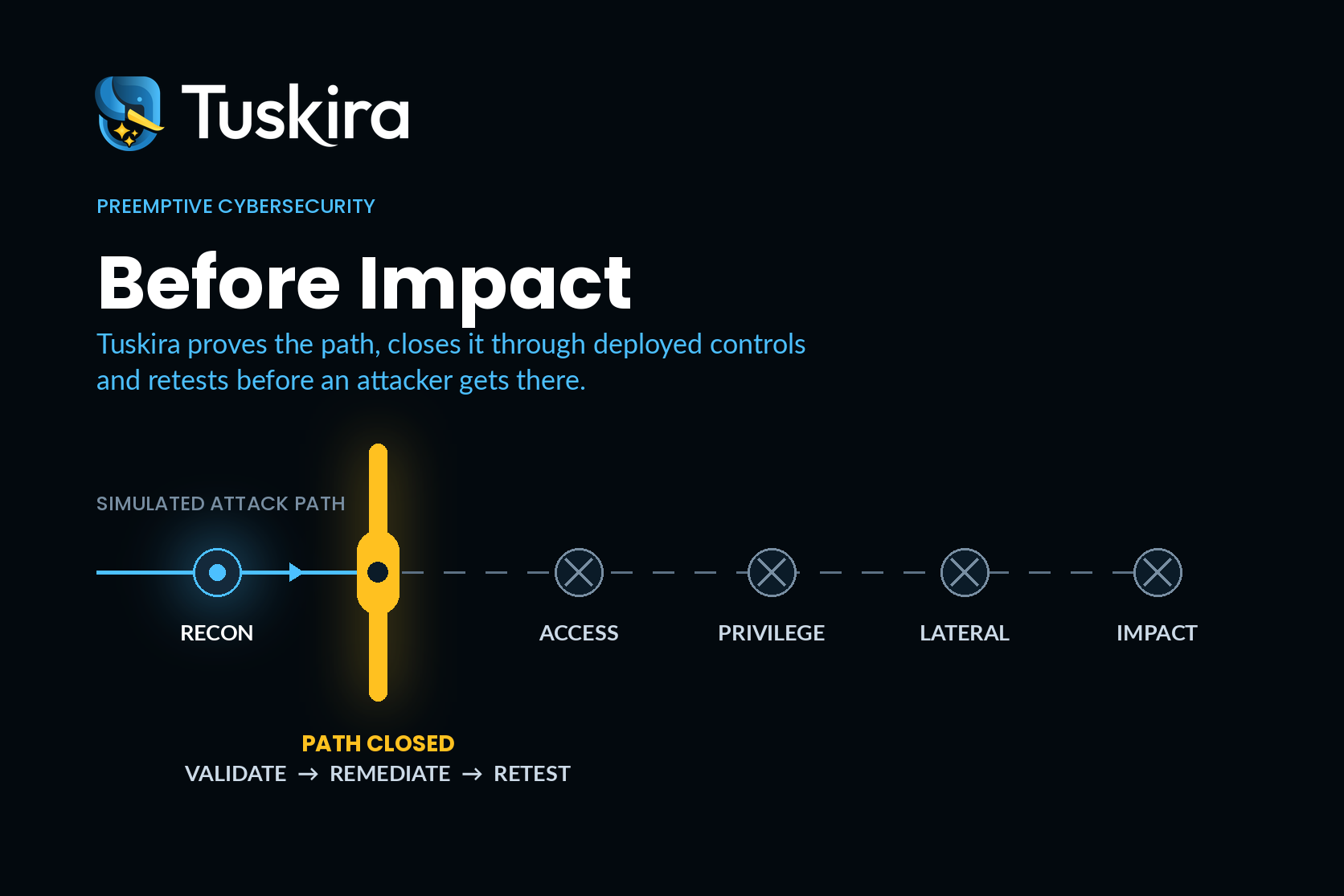
Tuskira Named in the 2026 Gartner® Emerging Tech Impact Radar: Preemptive Cybersecurity
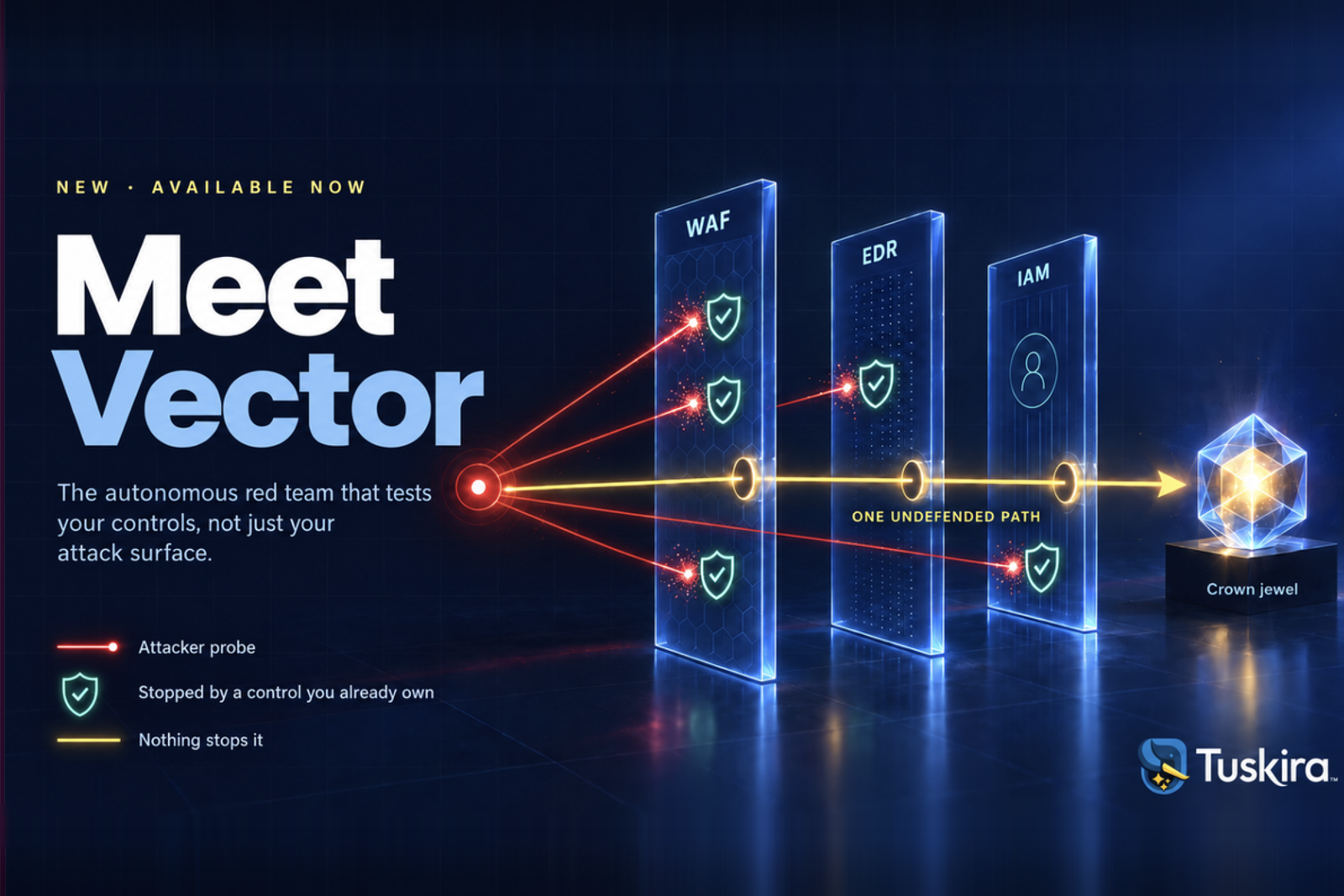
Meet Vector: Autonomous Red Teaming That Doesn't Stop at Exposed