Meet Vector: Autonomous Red Teaming That Doesn't Stop at Exposed
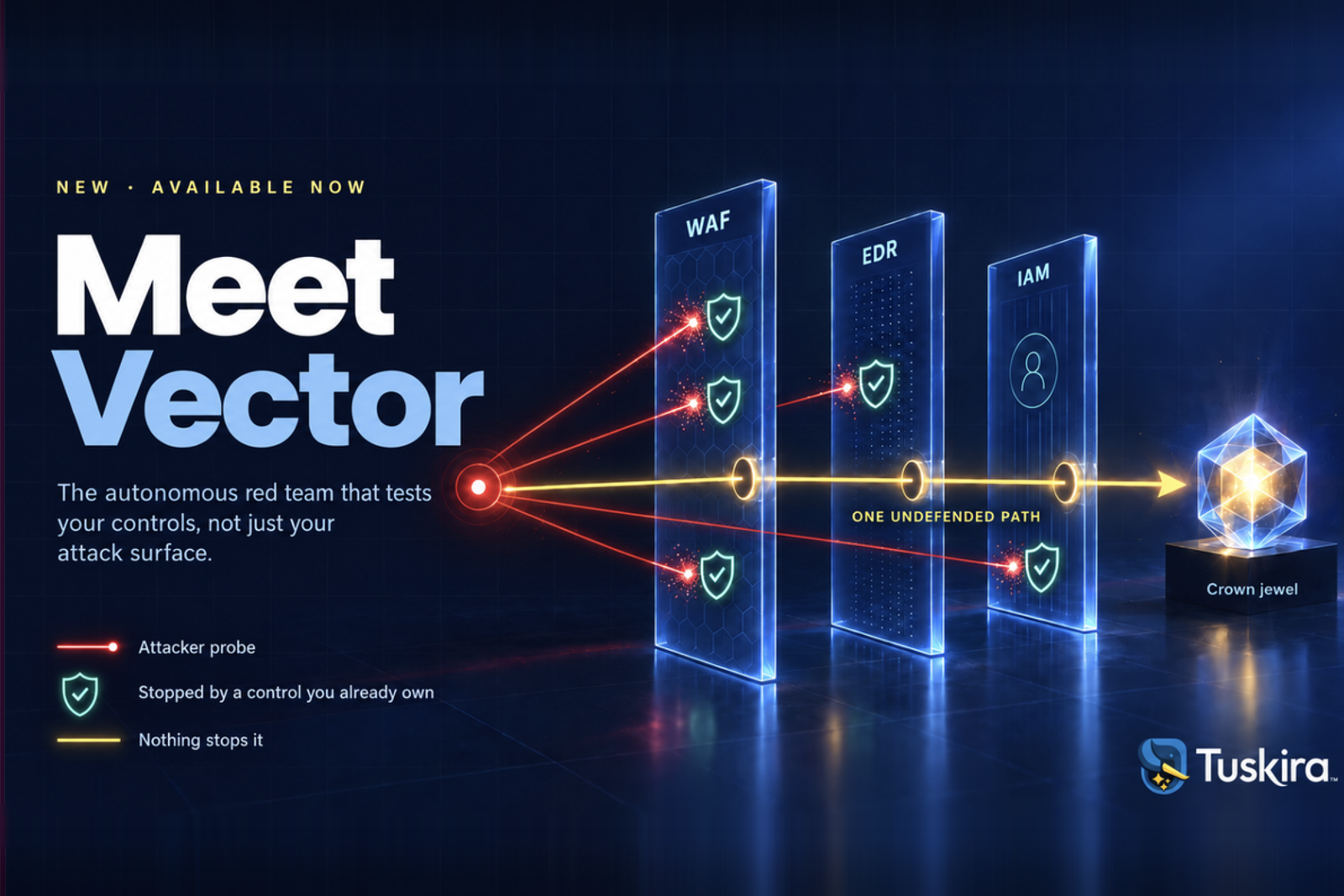
A red team engagement ends the way they always end.
Two weeks of work. A debrief call. A PDF with forty findings and a severity column. Somebody creates the tickets.
Then the environment keeps moving. A new subdomain goes up on Thursday. An engineer widens an IAM role to unblock a deploy. A WAF rule gets relaxed during an incident and nobody remembers to put it back. By the time the team works through the list, the list describes a company that no longer exists.
That is not a criticism of red teams. It is the nature of a point-in-time test.
Today we are shipping Vector, Tuskira’s autonomous red team agent, to give that work a heartbeat.
The problem
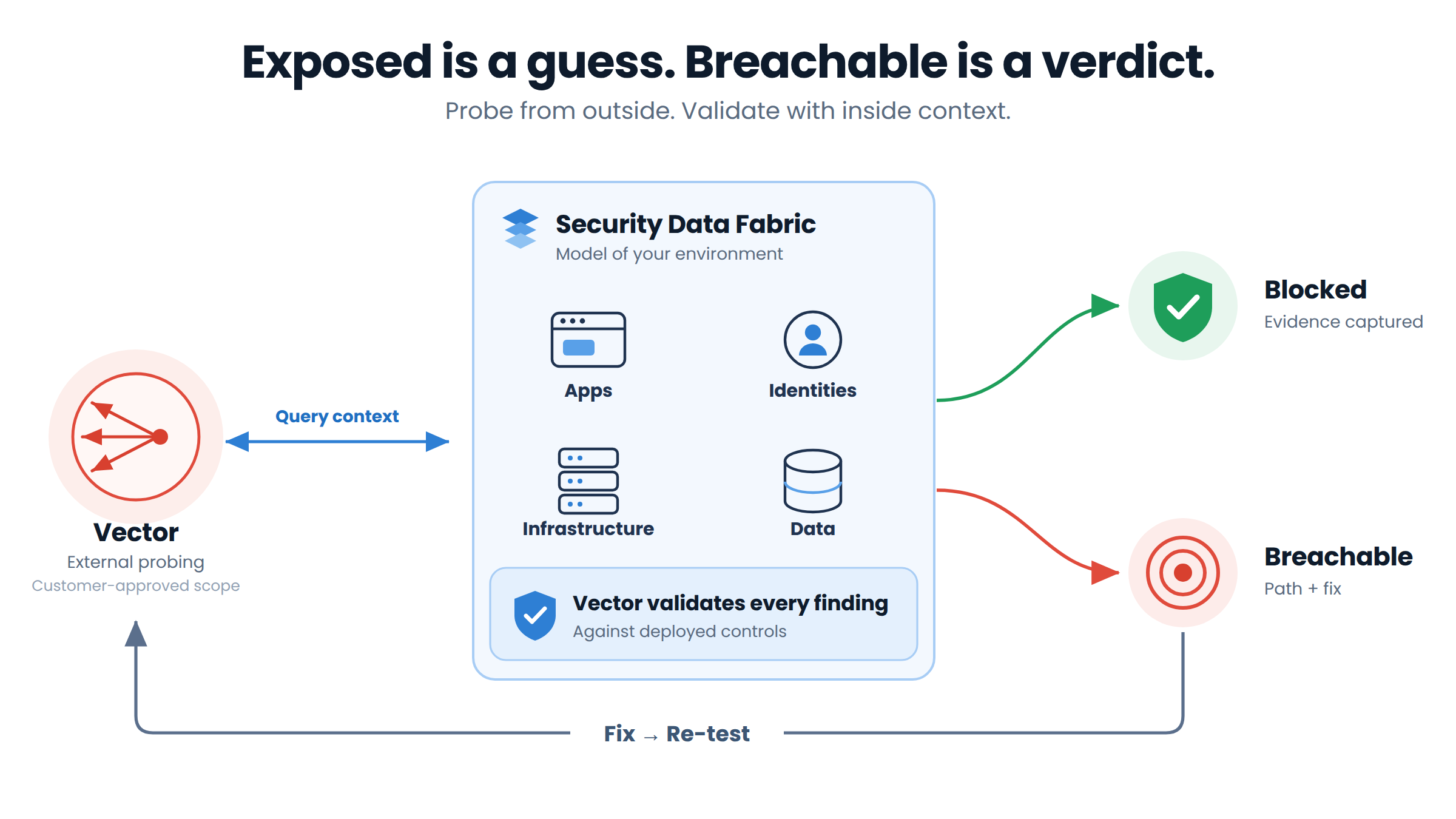
Exposed is a guess. Breachable is a verdict.
Most external testing tools are very good at one thing, which is telling you what is visible from the internet. Assets, services, subdomains, exposed identities, misconfigurations. That is genuinely useful, and it is also where many of them stop.
The problem is that “exposed” is not a finding a security team can act on. It is a lead. The questions that actually matter come after it.
Right now a human answers those questions, one finding at a time, which is why a forty-item report takes a quarter to work through and why so much of that quarter gets spent proving that things were never a problem.
Vector answers them before the finding reaches you.
How it works
How one finding travels
Vector probes your approved external scope using current TTPs, newly disclosed vulnerabilities and AI-driven attack techniques. That part looks like what an attacker does.
What happens next is the difference. Every finding gets dropped into Tuskira’s Security Data Fabric, which holds a normalized model of your environment. Your application and infrastructure topology. Your identities. Your deployed controls. The risks your existing tools are already reporting. Vector checks its own discovery against all of it.
So a finding does not arrive as a severity score. It arrives as an answer to five questions.
A finding your WAF already blocks never becomes remediation work. It closes with the evidence showing which control broke the path, which is also the artifact your auditor wanted. A finding nothing stops arrives with the attack path drawn, the blast radius calculated, and the specific control change that shuts it.
And because Vector runs continuously rather than on an engagement calendar, the answer stays current.
When the subdomain goes up on Thursday, Vector finds it Thursday.
Remediation
The fastest fix is often not a patch
This is the part that surprises people in the demo. When Vector finds a path that is genuinely open, the recommended fix is frequently something other than patching.
All of it in tools the organization already licenses, all of it deployable today rather than in the next maintenance window. Vector recommends or stages the change, where policy allows, and then re-tests the path to prove it actually stayed shut rather than marking a ticket resolved and hoping.
Patching still matters. It is just not always the fastest way to make an attacker’s path stop working, and for a lot of teams it is the only lever anyone thinks to pull.
The platform
Where Vector fits
Vector is not a standalone scanner bolted onto the side of the platform. It is the outside-in entry point into a loop that already existed.
Every one of those agents reasons over the same model of your environment. That is why a Vector finding can hand Iris an investigation with the asset, identity and blast-radius context already attached, and why Kairo can extend an external entry point into the full path to a crown jewel without anyone re-entering the data.
Kairo showed us the size of the prize when it launched in May.
The work that survives is work worth doing. Vector applies the same discipline to everything an attacker can see from outside.
Availability
Available today
Vector is available now for Tuskira customers, operating strictly within customer-approved scope.
If you want to see what an attacker can actually reach in your environment, and what your existing controls already stop, we will run it against your surface.
Request a demo →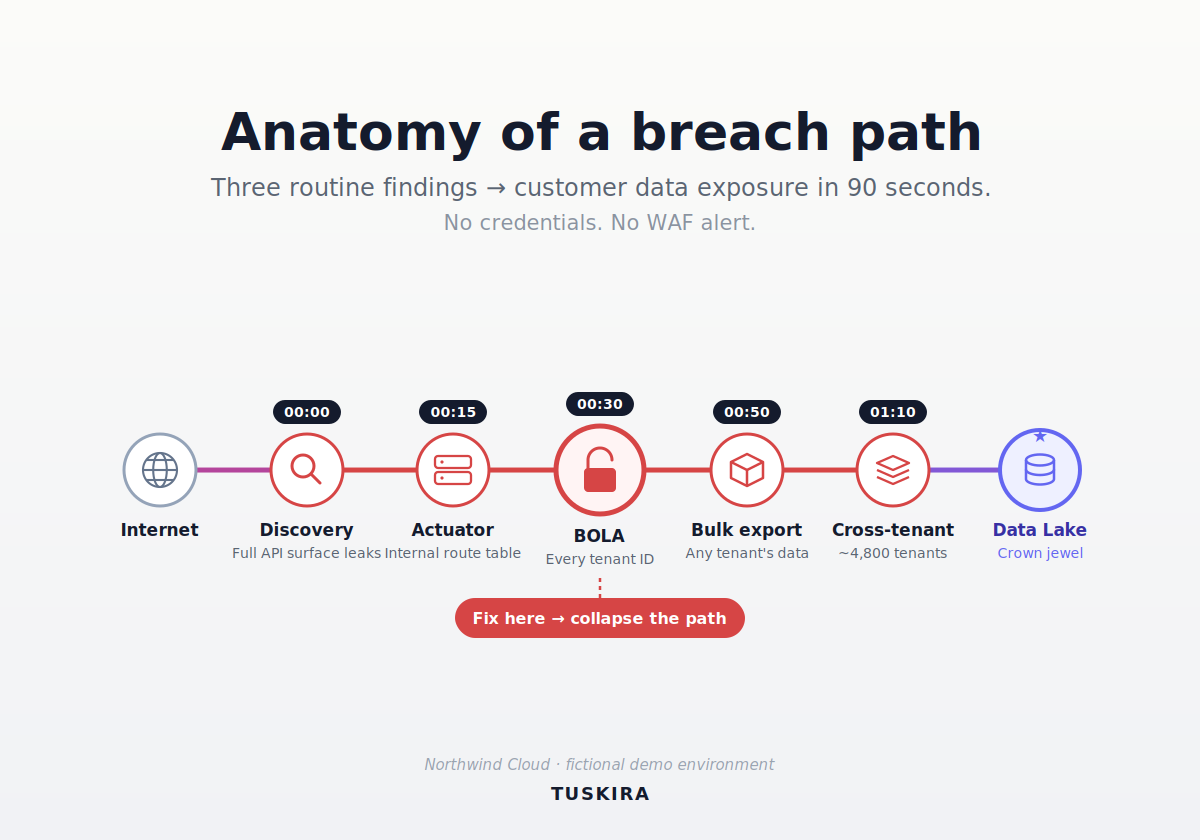
Anatomy of a Breach Path: How Three Boring Bugs Become a 90-Second Data Breach

OpenAI Just Called Its Zero-Day-Finding AI “Critical.” Defenders Should Too.