AI SOC Platforms in 2026: 8 Evaluation Criteria
What are AI SOC platforms?
AI SOC platforms apply AI agents to security operations work analysts have historically done by hand: triaging alerts, investigating incidents, validating risk, and taking or recommending response actions. Strong AI SOC platforms reduce decision load rather than relocating it, show the evidence behind every verdict, integrate with the tools already in place, and govern what agents are allowed to do without turning autonomy into a black box.
The category is young enough that the label covers several architecturally different products, and buyers routinely compare things that aren’t substitutes for one another. Establishing which type you’re evaluating comes before comparing features.
The three types of AI SOC platforms
1. AI-native investigation platforms are built around autonomous investigation agents. They connect to the tools you already run, work an alert end to end, and return a verdict with supporting evidence.
2. Hyperautomation and SOAR platforms with agentic features are workflow engines that have added AI. They excel at executing defined playbooks and are strongest where your process is already well understood.
3. SIEM-embedded copilots are assistants attached to a larger vendor’s platform. They are powerful inside that ecosystem and more limited outside it.
None is inherently better. But scoring a copilot against an investigation agent on one matrix produces a meaningless comparison.
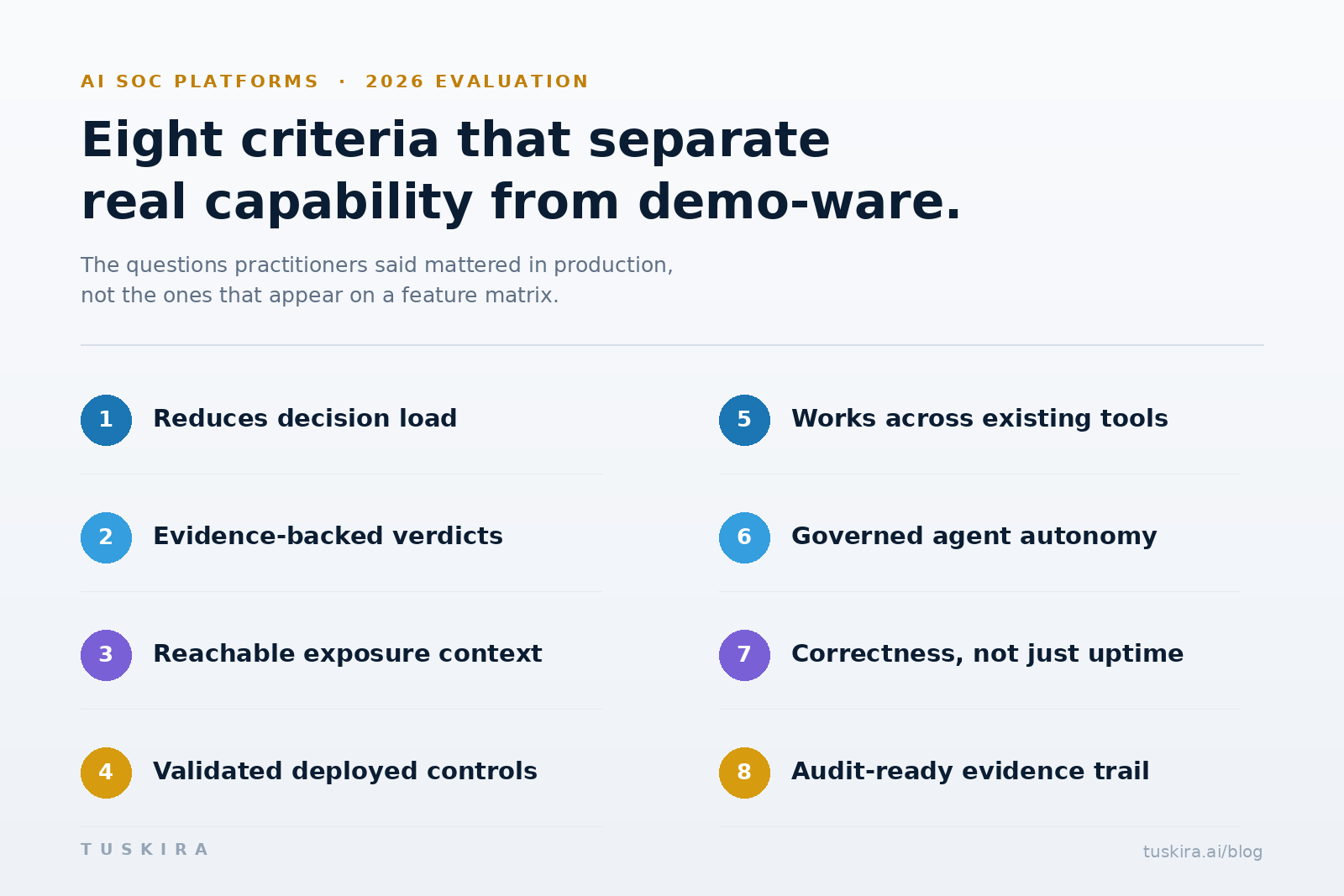
8 AI SOC platform evaluation criteria
The criteria below draw on working sessions of the AI Security Council, a group of CISOs, security architects, and practitioners who meet to compare notes on running AI inside security programs. They reflect what practitioners found mattered in production, which isn’t always what appears on a feature matrix.
1. Reduces decision load
The first question is whether the platform removes analyst work or relocates it. A tool that enriches an alert and hands it back has moved the decision, not made it.
Measure this by what reaches a human. If the same number of alerts still require an analyst to reach a conclusion, the platform has added a processing step rather than a decision.
Ask: what percentage of alerts close without human review, and what happens to the rest?
2. Produces evidence-backed verdicts
A verdict states a conclusion, shows the reasoning that produced it, and cites the evidence behind it. A confidence score does none of those things.
If the output is a number with no reasoning chain, an analyst has to redo the investigation to trust it, which returns you to criterion 1.
Ask: show me a full investigation output, including the reasoning chain and the underlying evidence.
3. Connects alert context to reachable exposure
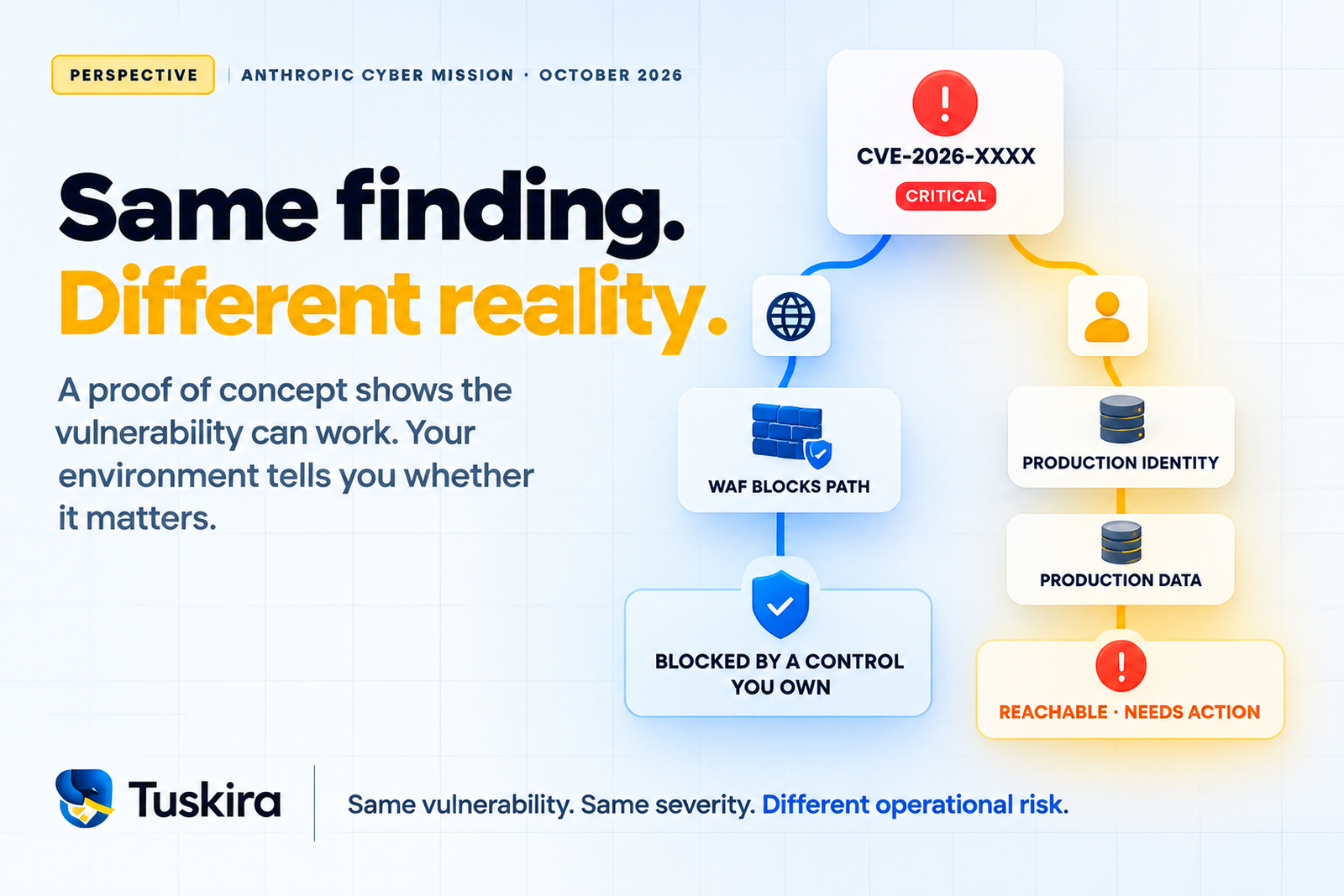
Severity scoring describes a vulnerability in the abstract. It says nothing about whether the flaw is reachable in your environment.
The gap is large in practice. In one analyzed environment during the Mythos disclosure cycle, only 2 of 1,596 disclosures were both reachable and unprotected.1 The other 1,594 were deprioritized with evidence: not present in the build, the vulnerable function never invoked, not deployed, internal-only, or already blocked by a deployed control.
This matters to the SOC, not just the vulnerability team. The same context that tells you whether a vulnerability is reachable also tells the SOC what an alert could actually touch.
Ask: is the vulnerable function actually called in our code, is it exposed, and can an attacker reach anything that matters from it?
4. Validates deployed controls
The question that ends most fire drills is whether the WAF, EDR, or firewall you already run would block the exploit path.
Control validation is what turns a critical finding into a deprioritized one, or confirms a real gap. Assumed coverage is how teams end up in a 2 a.m. war room over something their WAF already blocked.
Ask: do you test whether my deployed controls block the path, or assume coverage?
5. Works across existing tools
Most SOCs have made years of tooling investments. A platform that requires replacing them, or centralizing all telemetry into a new data lake, carries costs that rarely surface in the pricing conversation: migration time, duplicated storage, and a second ingest bill.
Federated search across existing tools avoids duplicating storage and widening the ingest footprint.
Ask: how many of my tools do you integrate with, does data have to move, and what has to change?
6. Governs agent autonomy
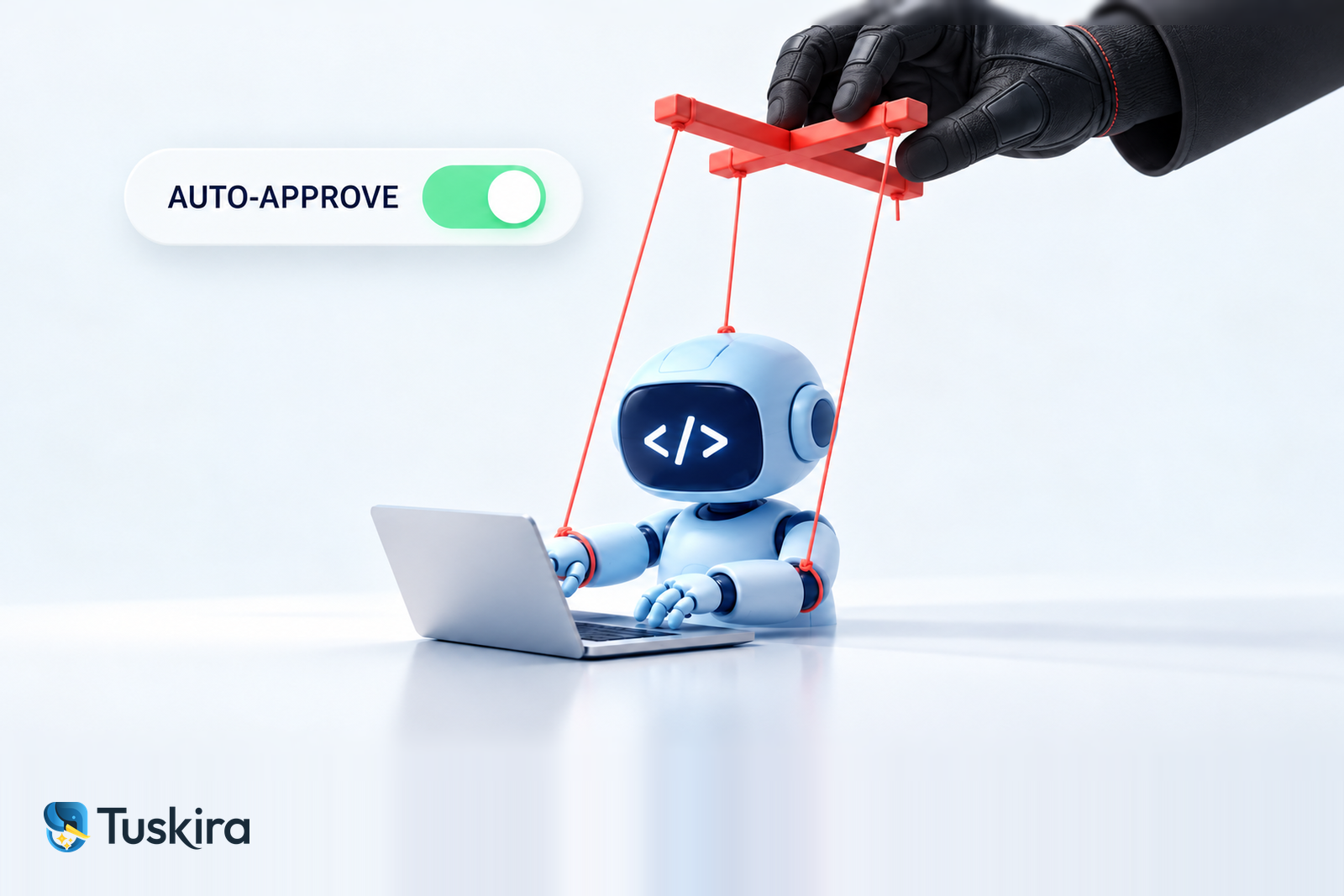
This is where AI Security Council discussions got sharpest. Agents are increasingly asking for something security should never grant casually: standing write access to production.
No mature organization gives a human standing write access to production without privileged access management or just-in-time controls. Agents should meet the same bar. Autonomy is a privilege earned per use case, not a feature switched on at deployment.
Ask: what can the agent do without approval, is that configurable per use case, and who is accountable when it isolates the wrong domain controller at 2 a.m.?
7. Measures correctness, not just uptime
An agent that is running and hallucinating is still “available” by every classic monitoring metric.
Availability has to be redefined to include correctness before agents touch transactional systems.
Ask: how do you measure whether the agent was right, not merely responsive, and what happens when it is confidently wrong?
8. Preserves audit-ready evidence
If AI influences containment decisions or investigative sequencing and those decisions aren’t logged and reviewable, incident response integrity is weakened. You can’t reconstruct what happened, and you can’t defend it afterward.
The same evidence trail answers the outside question. Regulators, insurers, customers, and acquirers no longer accept assurances about AI systems. They ask what AI is running, who owns it, what controls are in place, how those controls are tested, and how any of it can be independently validated.
Ask: what does the audit trail capture for every agent action, and can it be produced under external review?
Questions to ask AI SOC vendors
- Show me a full investigation output, including the reasoning chain and the evidence.
- What percentage of alerts close without human review?
- How do you determine whether a vulnerable function is actually reachable in my environment?
- Do you test whether my deployed controls block the exploit path, or assume coverage?
- How many of my existing tools do you integrate with, and does data have to move?
- What can the agent do without human approval, and is that configurable per use case?
- How do you measure whether the agent’s conclusions were correct?
- What does the audit trail capture for every agent action?
AI SOC platform red flags
Confidence scores without reasoning. A number an analyst can’t interrogate has to be re-verified, which is the work you were trying to remove.
Severity-based prioritization presented as risk-based. CVSS ranking with better visuals is still CVSS ranking.
Autonomy on by default. If standing production write access ships enabled, governance was an afterthought.
Uptime as the only reliability metric. It means correctness isn’t being measured.
Required data centralization. Sometimes justified, but it should be a deliberate architectural decision, not a hidden precondition.
Where Tuskira fits
Tuskira is a full-stack agentic SecOps platform. It unifies exposure, detection, and response on a shared Security Data Fabric, prioritizes by reachability and control validation rather than severity score, and closes exposures through the controls you already run. It integrates with 150+ security tools and queries data in place, with no centralization required.
Observed in production deployments: up to 95% fewer false positives, up to a 99% reduction in breachable exposure, and in one global financial services deployment, 12.3M raw findings reduced to 0.46% actionable risk with triage time falling from three weeks to 30 minutes.2
“2026 is the year cyber defenses shift from AI-assisted to AI-enabled attacks, and defenders need to adapt. That is why we partnered with Tuskira.” — Charles Gifford, Chief Information Security Officer, Intrado
The criteria above apply to any vendor in this category, including us. If a platform can’t answer them, the demo is doing more work than the product.
See Tuskira on your stack → · Compare platforms →
1 Tuskira Research, Mythos / Project Glasswing disclosure cycle. Full methodology in The Emerging Patch Gap. This research was cited in J.P. Morgan’s Eye on the Market: Patchmageddon (July 2026).
2 Figures observed in named production deployments; deployment detail available under NDA on request.
Attackers Are Using AI. Should Your AI Agents Be Auto-Approving Their Next Move?
Anthropic on Finding Vulnerabilities Becoming the Easy Part