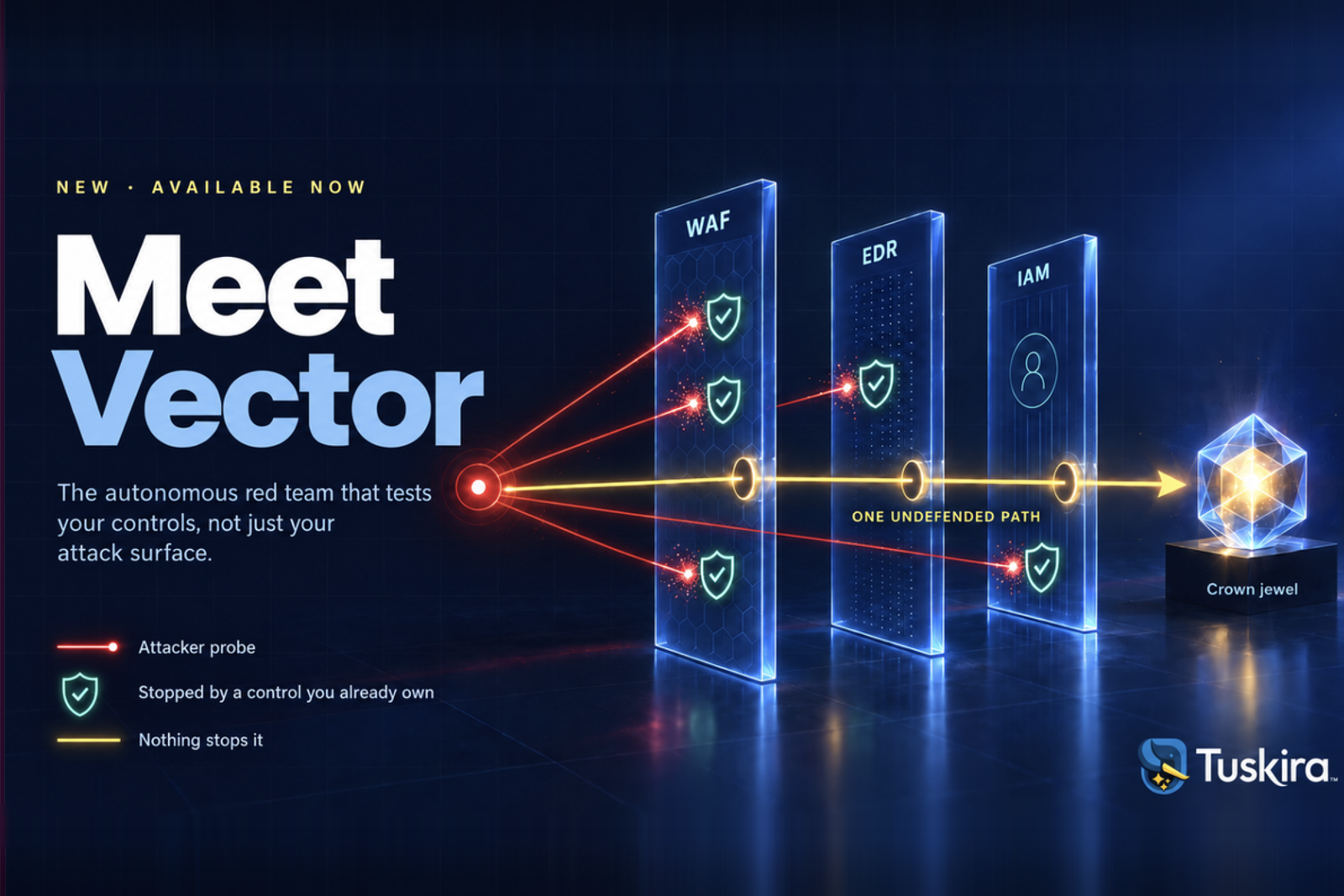
Tuskira Named in the 2026 Gartner® Emerging Tech Impact Radar: CSP Infrastructure and Operations
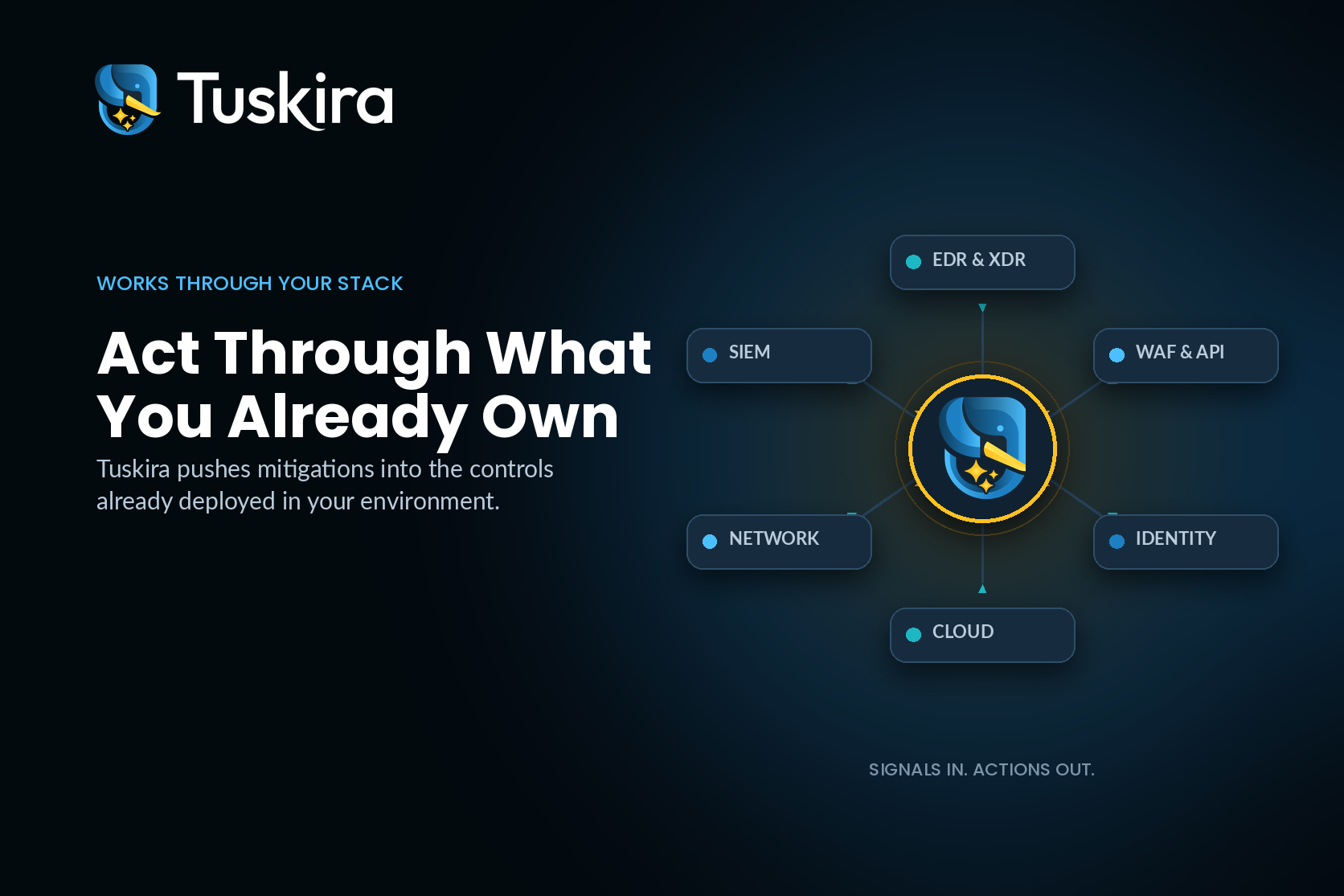
Tuskira has been named in the 2026 Gartner® Emerging Tech Impact Radar: CSP Infrastructure and Operations, published 22 September 2026.
What the research covers
The research is directed at product leaders and looks at emerging technologies across connectivity, automation, intelligence and cyber defense for communications service providers. The following quotes are reproduced verbatim from the research.
“Expanding physical, digital and spectrum attack surfaces will mandate resilient, hardware-enforced security frameworks.”
“For product leaders, seamless interoperability is now a baseline requirement rather than stand-alone feature depth. Security tools unable to ingest and emit standards-based signals will be excluded from the mesh architecture.”
Source: Gartner, Emerging Tech Impact Radar: CSP Infrastructure and Operations, Sylvain Fabre, 22 September 2026.
The views that follow are Tuskira's own.
Being named in a network infrastructure radar is the point
It would be easy to read an inclusion in research aimed at communications service providers as adjacent to what we do. We read it the opposite way.
Carriers and large distributed operators are not a niche security buyer. They are the extreme case of the problem every enterprise now has: an estate too large to inventory by hand, spread across too many jurisdictions and physical locations, running too many generations of technology at once, with a security stack assembled from dozens of vendors over fifteen years and no realistic path to consolidating it. Whatever works there works in an ordinary enterprise. The reverse is not true.
So the interesting signal is not that security showed up in an infrastructure radar. It is that the architecture question, how do these pieces work together, has become the security question.
Interoperability is the entry fee now
For most of the last decade, security products competed on depth. Best detection, best coverage, best rule set. That competition assumed the product would be evaluated on its own terms, as a thing you buy and look at.
That assumption is breaking. Nobody is buying a tool to look at anymore; they are buying something that has to function as part of an architecture that already exists and that they cannot rip out. A product that cannot accept signals from the rest of the stack in a form the stack already emits, and cannot push actions back into it, is not a component of that architecture. It is a parallel system that generates work.
The practical version of this test is unglamorous. Does it speak the schemas the rest of the estate already uses, or does it require a translation project? Does it have an API for the things people actually need to automate, or only for the things that were easy to expose? Can it write to a control, or only read from one? Can someone else's orchestration layer drive it, or does it insist on being the orchestration layer?
What a distributed estate does to the math
Scale changes which problems are hard. In a single data center, an exposure list is annoying. Across tens of thousands of sites, multiple clouds, several regulatory regimes and a long tail of equipment that predates most of the staff, the list is not actionable at all. There is no version of that program where humans triage their way to safety.
Two things become non-negotiable at that size. The first is that decisions have to be made with evidence rather than inference, because the volume of low-confidence findings is high enough to swamp any team that tries to chase them. The second is that action has to happen through controls that are already deployed, because standing up new enforcement points across a distributed estate is a multi-year program, not a remediation step.
That combination, validate with evidence and act through what is already there, is the only approach that survives contact with an environment of that size. It is also, not coincidentally, the design constraint we started from.
How Tuskira is built for this
Tuskira sits on top of the security stack rather than beside it. It ingests exposure, asset, identity and control-configuration data from the tools an organization already runs, normalizes it into a single graph, and uses that graph to determine which attack paths actually complete given the controls as configured.
When action is warranted, Tuskira pushes the mitigation through the enforcing control that already exists, whether that is a web application firewall, an endpoint platform, an identity provider, a network segmentation policy or a cloud security control. It does not ask the customer to route traffic through us or to replace an enforcement point to get value. Then it retests and records the result.
We designed it that way because the alternative does not deploy. In a distributed estate, the security tool that demands to be the center of the architecture is the security tool that never finishes rolling out.
Read the research
Gartner clients can access Emerging Tech Impact Radar: CSP Infrastructure and Operations through the Gartner website.
Gartner, Emerging Tech Impact Radar: CSP Infrastructure and Operations, Sylvain Fabre, 22 September 2026.
GARTNER is a registered trademark and service mark of Gartner, Inc. and/or its affiliates in the U.S. and internationally and is used herein with permission. All rights reserved.
Gartner does not endorse any vendor, product or service depicted in its research publications and does not advise technology users to select only those vendors with the highest ratings or other designation. Gartner research publications consist of the opinions of Gartner's research organization and should not be construed as statements of fact. Gartner disclaims all warranties, expressed or implied, with respect to this research, including any warranties of merchantability or fitness for a particular purpose.
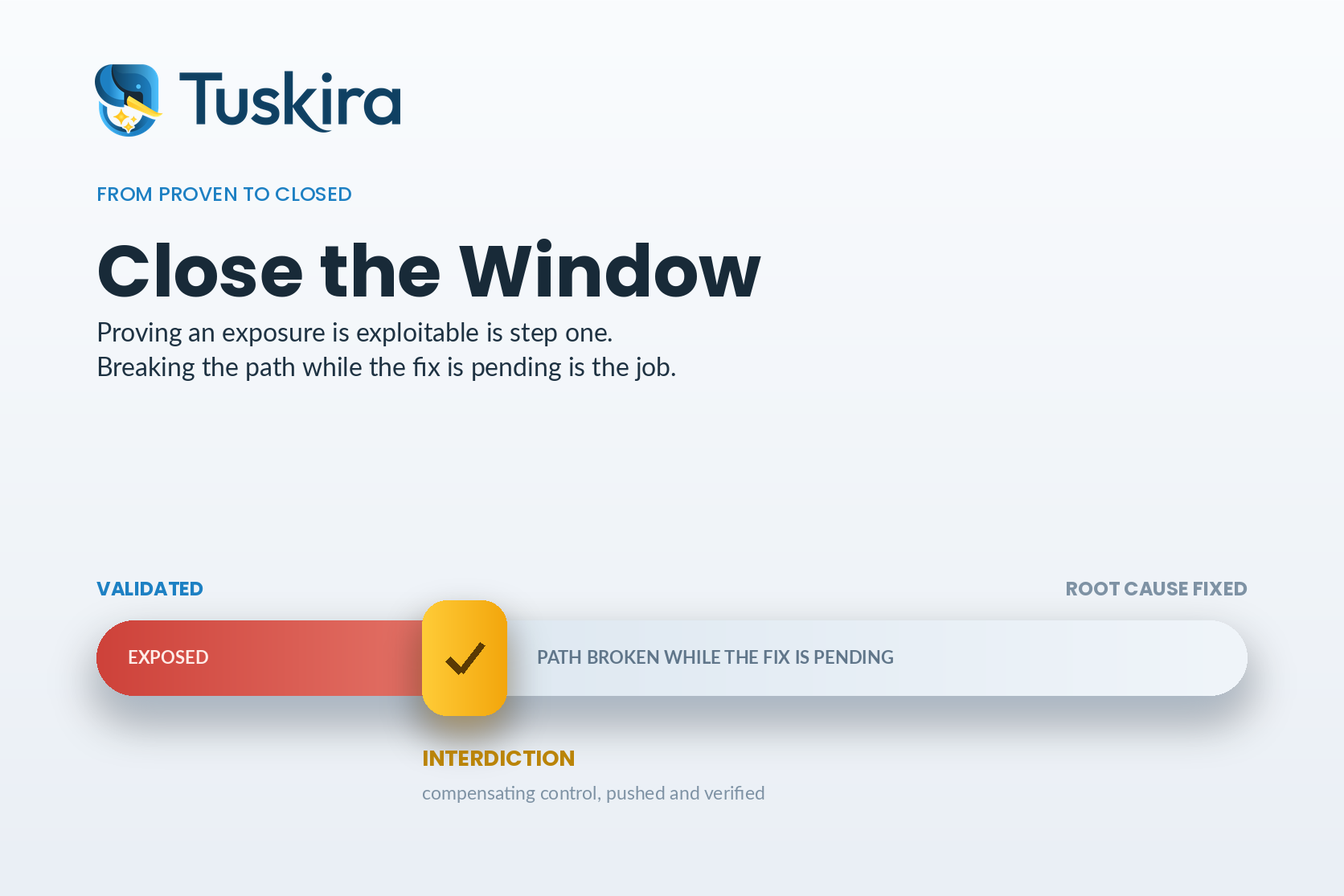
Tuskira Named in the 2026 Gartner® Research Note, Agentic Security: Preemptive Exposure Management
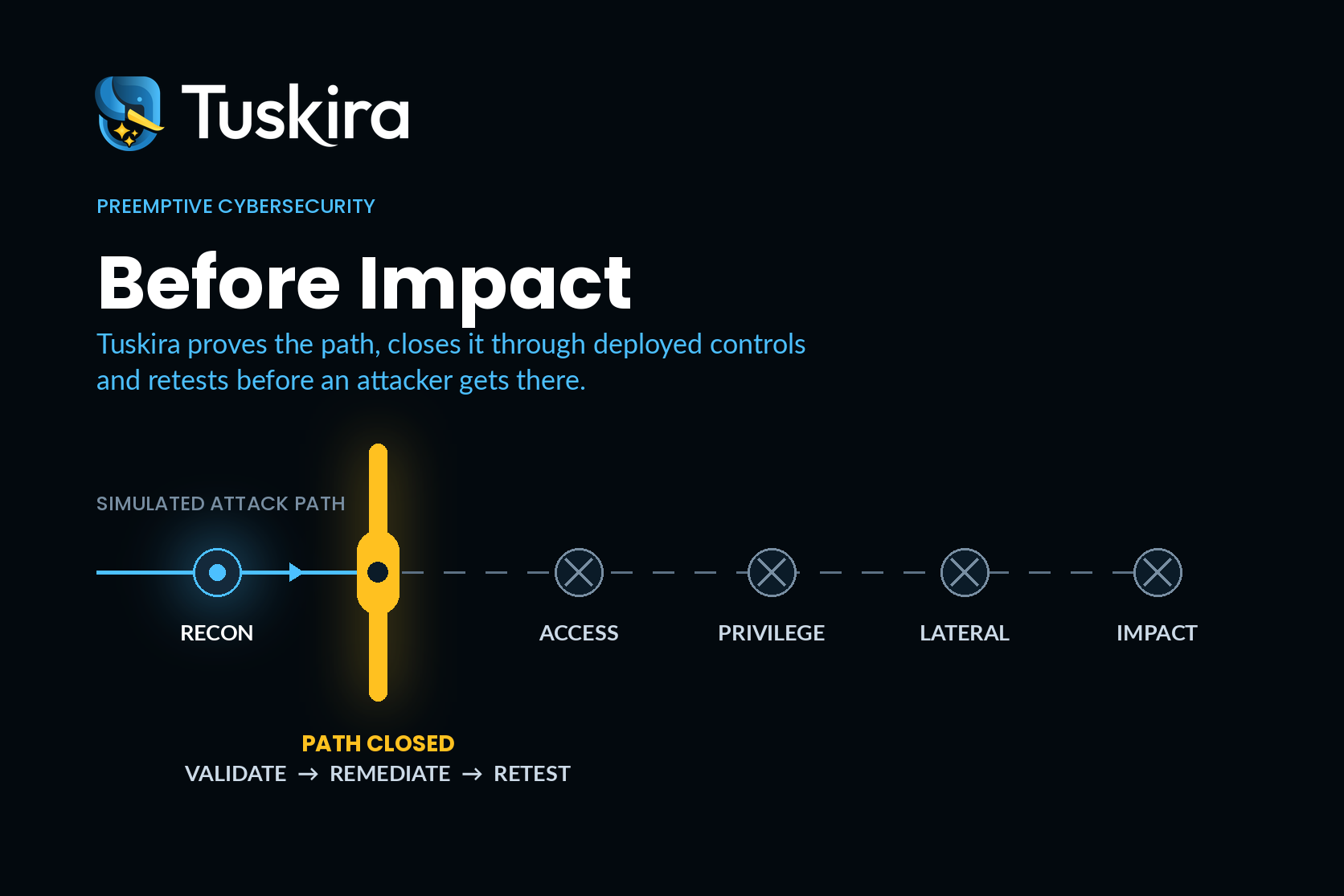
Tuskira Named in the 2026 Gartner® Emerging Tech Impact Radar: Preemptive Cybersecurity